














































Global Medical Supplies Supplier: How Buyers Build a Resilient Supply Chain
Global Medical Manufacturer: How Multi-Base Sites Cut Supply Risk
FROM: INTCO Medical
|
09 Sep 2026
A delayed shipment of gloves, protective products, or rehabilitation equipment can create a problem far beyond purchasing. It may affect hospital contracts, distributor commitments, and production schedules that were planned months ahead. That is why more healthcare buyers now assess medical device supply risk at the production-network level, not only by reviewing a supplier’s price and capacity.
For a global medical device manufacturer, the question is simple but difficult to answer: can the supplier keep serving you if one factory faces a raw-material shortage, transport delay, power interruption, or regulatory hold?

Why Is Medical Device Supply Risk Increasing?
Medical device supply chains have several weak points. Many products rely on specialized polymers, packaging materials, molds, sterilization services, or imported components. A disruption at one point can stop the finished product from moving.
Single-site dependence creates a hidden bottleneck
A supplier may quote large annual capacity, yet most of that capacity could sit in one location. If that site loses a critical input or faces a local shutdown, your purchase order has nowhere else to go.
This is especially serious for products with strict validation requirements. You cannot always switch factories in a week. A new site may need process validation, quality audits, sample approval, and regulatory documentation before commercial shipments begin.
Long lead times make small errors expensive
Long-distance shipping adds customs exposure, port congestion, and unpredictable transit times. When demand rises suddenly, buyers often discover that the real constraint is not factory output. It is the time needed to move finished goods across borders.
A useful review compares quoted lead time with actual lead-time variance, order fill rate, and recovery time after a disruption. The average number looks neat on a spreadsheet. The worst month usually tells you more.
How Does Multi-Base Production Reduce Supply Risk?
Multi-base production places qualified manufacturing capacity in more than one geographic location. The sites may produce the same product, complementary product lines, or different stages of the same supply chain.
The model does not remove every risk. It gives you options when one part of the network is under pressure.
INTCO Medical provides a practical example of this model. The company has established 10 major R&D and manufacturing bases worldwide, supported by seven international marketing centres in Los Angeles, Vaughan, Essen, Tokyo, Kuala Lumpur, Shanghai, and Hong Kong. This network connects manufacturing capacity to regional market support, enabling the company to serve customers across markets without relying on a single production location.
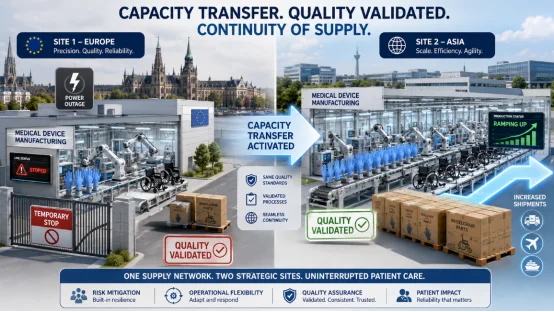
Capacity can shift when one site is disrupted
If two or more sites can produce an approved product, orders can be reallocated when a factory faces a temporary problem. The receiving site still needs available labor, materials, equipment, and shipping access, so the transfer is not automatic. Good planning defines these conditions before an emergency.
A practical dual sourcing strategy should specify:
- Which products can move between sites
- The minimum transferable monthly volume
- Approved raw-material alternatives
- Required quality and regulatory records
- The decision owner for emergency allocation
Geographic spread lowers transport exposure
Production in different regions can shorten delivery routes to major markets and reduce dependence on one port or border. It also gives buyers more flexibility when freight rates or customs conditions change.
The benefit is not simply “more factories.” It is a wider set of workable routes from material purchase to final delivery.
Business continuity becomes operational
Many continuity plans remain on paper because they lack tested production scenarios. Multi-base production turns business continuity planning into a real operating process.
You can run a tabletop exercise around a practical event, such as a 30-day shutdown at the primary site. The exercise should answer four questions:
- How much inventory is available?
- Which site takes the next order?
- How long does qualification take?
- Which customer commitments receive priority?
What Should You Check Before Approving a Second Site?
A second address does not automatically create a resilient medical supply chain. Buyers need evidence that the additional site can make the product to the same approved standard.
Review qualification and validation records
Ask for a clear supplier qualification package. It should cover quality management certification, process validation, equipment controls, change management, inspection methods, and traceability.
For regulated products, compare the two sites line by line. Check whether they use equivalent materials, test methods, packaging formats, sterilization controls, and release criteria. If the sites use different processes, the transfer risk may be higher than expected.
Compare real capacity, not nameplate capacity
Medical device manufacturing capacity should be measured through usable output, not the maximum theoretical speed of a machine.
Review:
|
Metric |
Why It Matters |
|
Qualified monthly output |
Shows what can ship under approved conditions |
|
Utilization rate |
Reveals how much spare capacity remains |
|
Changeover time |
Indicates how quickly production can switch |
|
Scrap and rework rate |
Signals process stability |
|
On-time-in-full rate |
Connects capacity with customer service |
|
Recovery time objective |
Measures disruption response |
A site running at 95% utilization may look efficient, but it has little room for a sudden order increase.
Check whether materials are also diversified
A supplier can have multiple factories and still depend on one resin producer, one packaging converter, or one sterilization provider. Ask whether critical inputs have approved alternatives and whether those alternatives have been tested.
This is where multi-sourcing in medical device manufacturing becomes broader than factory count. It includes materials, tooling, logistics, testing, and specialist services.
How Can You Measure Supply Chain Resilience?
Resilience is easier to manage when you attach numbers to it. Set a small group of metrics and review them quarterly with your supplier.
Track exposure and recovery
Useful measures include supplier concentration by product, days of safety stock, lead-time variance, recovery time, and the percentage of volume that can move to another qualified site.
A simple risk score can combine three factors:
Exposure × disruption likelihood × recovery time
A product with one factory, one raw-material source, and a 90-day transfer period deserves more attention than a product with two validated sites and flexible logistics.
Test the plan before a crisis
Request evidence from mock recalls, capacity transfers, quality audits, or emergency allocation exercises. Ask what happened during the test, not only whether the test was completed.
Some buyers also include a supply-risk review in annual business meetings. It can cover new site approvals, equipment expansion, labor conditions, freight changes, and regulatory updates.
How Does INTCO Medical Support Multi-Base Manufacturing?
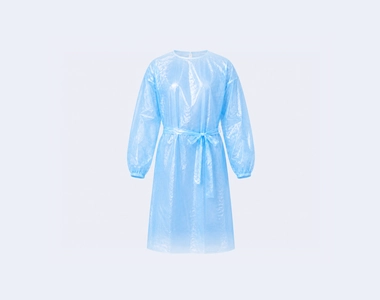
INTCO Medical has developed a diversified manufacturing network covering medical consumables, protective products, rehabilitation equipment, and physiotherapy products.
Its disposable glove operations are distributed across Zibo, Qingzhou, Huaibei, Jiujiang, Anqing, and Quang Ninh, Vietnam. The company has an annual disposable glove production capacity of 107 billion pieces, including 74 billion nitrile gloves and 33 billion PVC gloves. The combination of large-scale capacity and multi-location production provides a stronger foundation for high-volume order fulfillment and supply continuity.
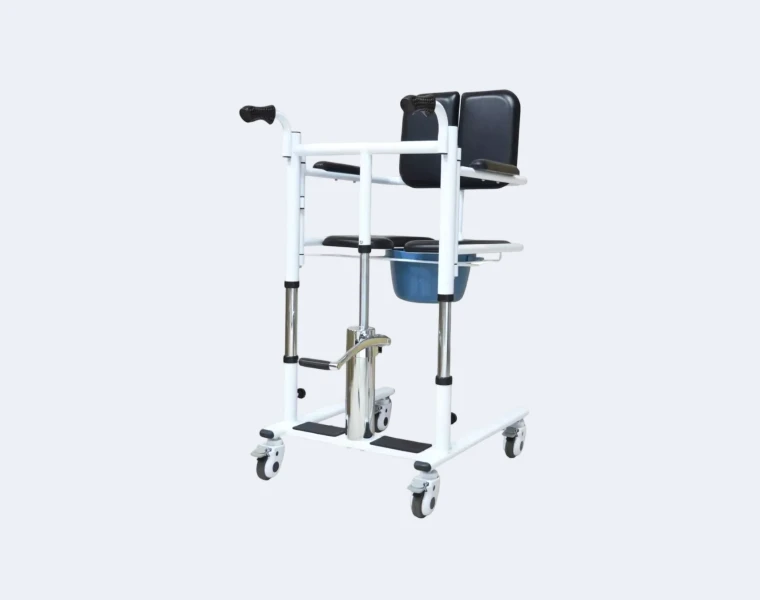
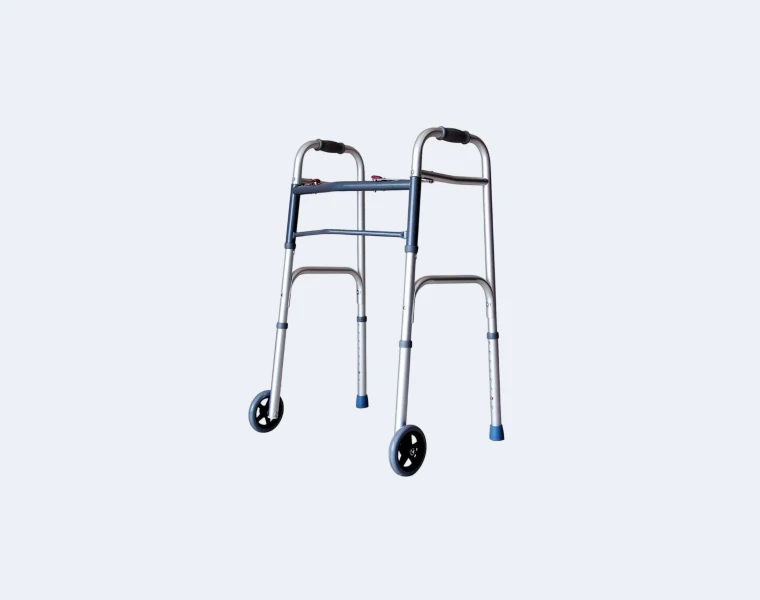
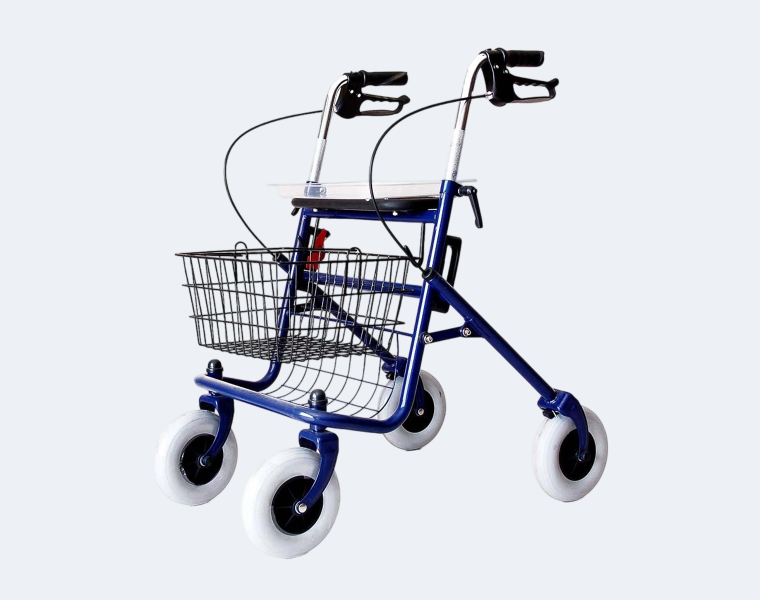
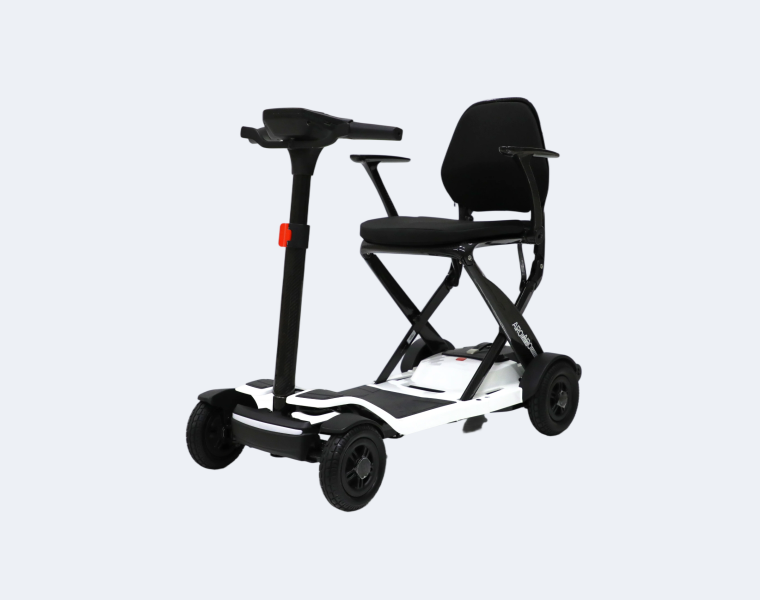
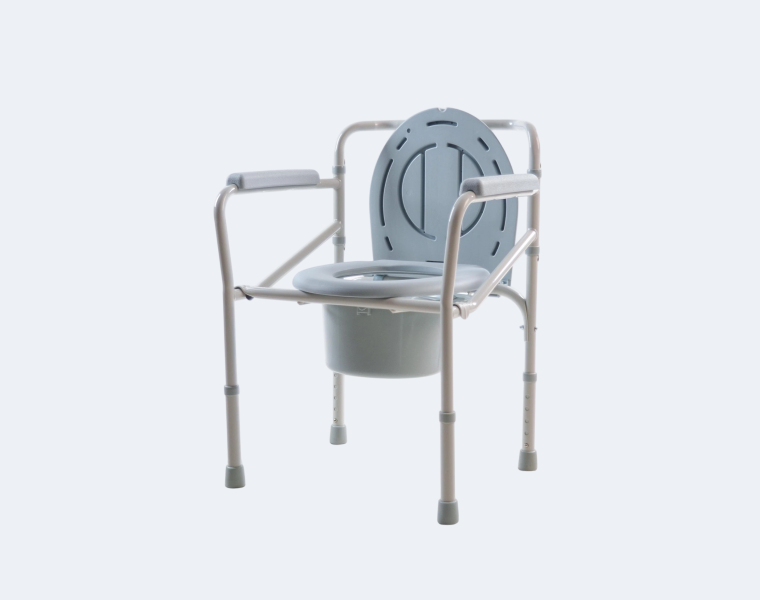
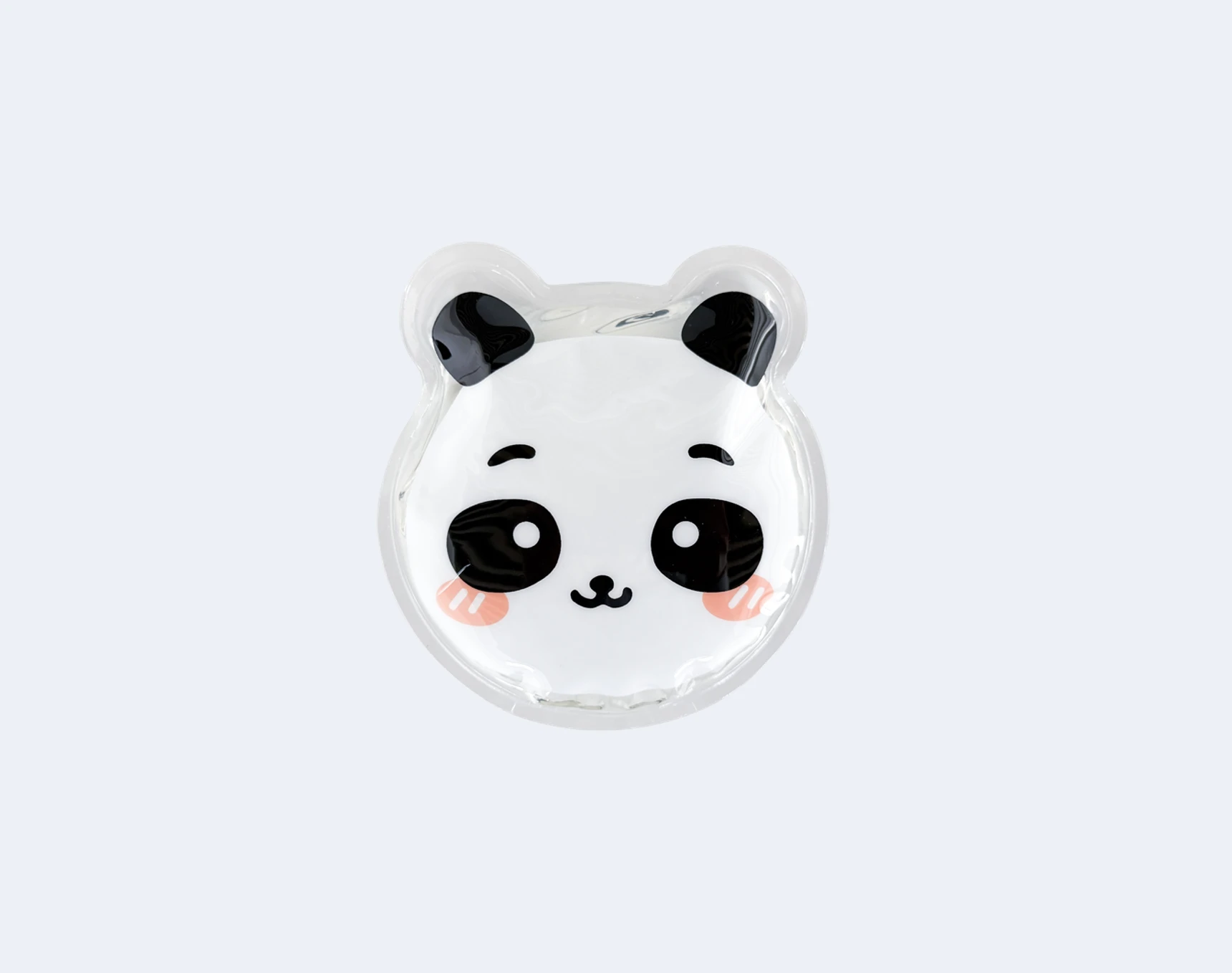
INTCO Medical’s manufacturing footprint also extends beyond disposable gloves. Its Zhenjiang base produces wheelchairs, patient lifts, walkers, and other rehabilitation equipment, with 18 product codes registered with the U.S. FDA. Hot and cold therapy products are manufactured in Zhenjiang and Shanghai, while Shanghai also supports ECG electrode production.
The company has also established vertically integrated supporting operations covering plastics, materials, molds, and energy services. These internal capabilities can reduce dependence on individual external suppliers and improve coordination across the manufacturing process.
Together with seven international marketing centers, this network helps INTCO Medical connect production planning, quality management, export logistics, and regional customer support. For healthcare buyers, the value lies not only in production capacity, but also in a diversified manufacturing footprint that reduces dependence on a single factory or narrowly focused supply chain.
FAQ
Q1: What is multi-base production in medical device manufacturing?
A: It is the use of two or more qualified production sites to make the same products or support related stages of the supply chain.
Q2: Does multi-base production remove all supply risk?
A: No. It reduces dependence on one location, but material shortages, regulatory issues, labor constraints, and transport disruption can still affect several sites.
Q3: How is a second manufacturing site qualified?
A: Buyers typically review quality certifications, process validation, equipment equivalence, material controls, testing methods, traceability, and regulatory documentation before approving the site.
Q4: Which metrics show supply chain resilience?
A: Useful metrics include qualified output, utilization, lead-time variance, order fill rate, safety-stock coverage, transferable volume, and recovery time objective.
Q5: How should you compare a global medical device manufacturer?
A: Compare its qualified production footprint, product approvals, material sourcing, quality records, logistics options, capacity data, and documented response plan for major disruptions.