


 Medical Consumables
  Rehabilitation Equipment
  Physical Therapy
  Patient Monitoring & Electrosurgery
  Personal Care



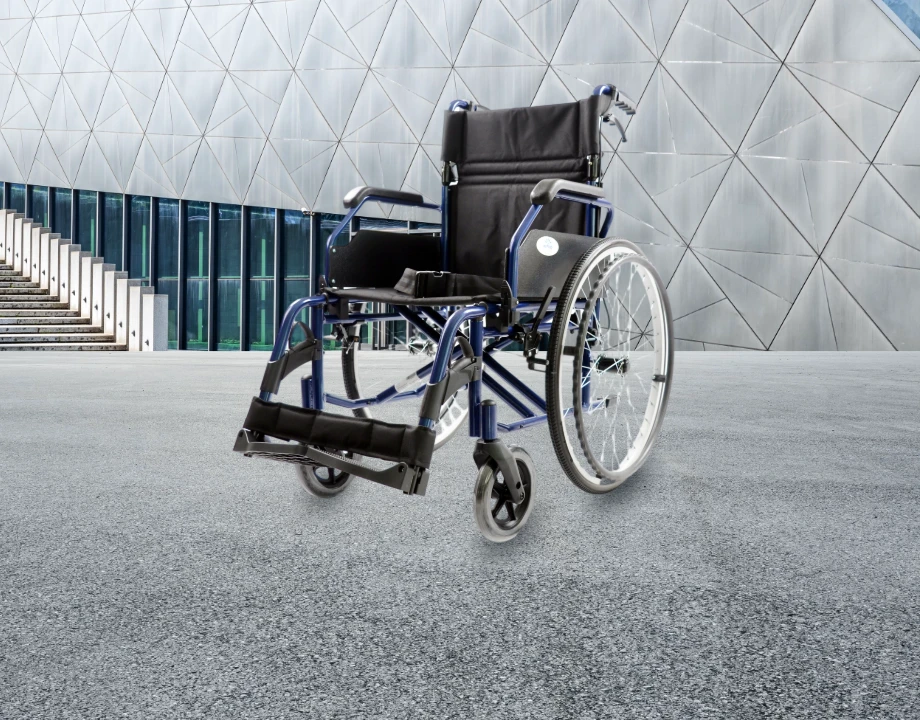
Choosing the best manual wheelchair for daily use is a decision that impacts long-term musculoskeletal health, yet many buyers focus solely on price tags rather than structural integrity. At the INTCO Medical manufacturing base, we’ve seen how a 0.5mm deviation in the cross-brace alignment can lead to premature frame fatigue within six months of heavy use. To find the best manual wheelchair, users and distributors must look beyond the glossy catalog photos and understand the "invisible" engineering that prevents common field failures. Finding the best manual wheelchair means choosing a device where every weld point has been stress-tested for 200,000 cycles under load.
Expertise: Solving the Compliance and Stability Puzzle
In the mobility industry, a product is only as good as its certifications are rigorous. While many offer manual wheelchairs, navigating the gap between a basic "Class I" device and one that truly meets the ANSI/RESNA standards requires technical foresight. For instance, in the US market, Medicare reimbursement often hinges on the K0001 through K0005 coding system. A "standard" chair (K0001) is unsuitable for a user who self-propels for 4+ hours a day; for that, we recommend the ultra-lightweight K0005 frames with adjustable axle positions to prevent rotator cuff injuries.

When we consult with global healthcare distributors, we don't just send a contact us link; we provide a terrain-specific selection matrix. For example, solid polyurethane tires are ideal for clinical indoor environments to eliminate maintenance, but for users in suburban areas with uneven pavement, pneumatic tires with high-rebound inner tubes are necessary to absorb high-frequency vibrations that lead to spinal fatigue. This engineering-led approach is what defines a true manual wheelchair manufacturer.
Experience: From the Production Line to the Shipping Container
"Professionalism" isn't a word we throw around; it’s a process we document. In the INTCO workshop, the most critical "hidden" failure point is the front caster housing. If the housing isn't perfectly perpendicular to the floor, the chair will "flutter" at high speeds—a dangerous phenomenon for active users. We prevent this by using robotic welding arms for the main frame, followed by a manual alignment check on a precision jig. When clients visit our facility, we don't just show them the showroom; we take them to the salt-spray testing chamber where we prove our chrome plating can withstand 96 hours of corrosion testing without pitting.
One specific instance of our problem-solving occurred during a recent large-scale order for a European distributor. The client required a specific folding mechanism that wouldn't "pinch" the user’s hand—a common complaint in older designs. Our R&D team spent three weeks prototyping a recessed hinge system with a secondary safety lock. We didn't just tell them it worked; we sent a high-speed video of the mechanism undergoing a 5,000-fold durability test before mass production began. This is the level of transparency you should expect when you learn more about us and our operational DNA.
Authority: Proven Performance on the Global Stage
Authority is not claimed; it is validated by third parties. INTCO Medical has consistently demonstrated its industry leadership through a visible presence at major global forums. Our recent showcases at MEDICA in Germany and the Arab Health exhibition in Dubai aren't just for marketing—they are where we engage with the world’s top physical therapists to refine our rehabilitation products. These international trade fairs provide the "proof of presence" that many smaller factories lack.
Our authority is further backed by our status as a publicly-listed entity, which necessitates a level of financial and operational transparency that private workshops cannot match. When the World Health Organization discusses the global need for high-quality assistive technology, they emphasize the importance of sustainable manufacturing. By adhering to ISO 13485 quality management systems, INTCO ensures that our medical consumables and mobility devices meet the strict legal requirements of the EU MDR and US FDA.
Trust: Managing Risks and Clear Terms of Engagement
Trust is built by discussing what happens when things go wrong. Many manufacturers hide their "After-Sales" policy in fine print; we put it front and center. At INTCO, our lead times are calculated using an ERP system that factors in real-time raw material fluctuations. If a delay is predicted due to shipping congestion, we notify the client 14 days in advance. We offer a 1-year warranty on the main frame, and in the rare event of a manufacturing defect, we don't just offer credit—we have a documented "Red-Channel" replacement process to ensure user downtime is minimized.
We also address the "elephant in the room": payment and logistics risks. We work with top-tier logistics partners to provide DDP (Delivered Duty Paid) options for many regions, taking the risk of customs clearance off the buyer's shoulders. By being clear about these operational boundaries, we foster a partnership built on reality rather than empty promises. This philosophy extends across our entire range of physical therapy equipment and medical consumables.
Partnering with a Manufacturer That Values Integrity
As a premier manual wheelchair manufacturer, INTCO Medical is dedicated to transparency in every facet of production. We don't just sell wheelchairs; we provide mobility solutions that have been vetted by the Centers for Disease Control and Prevention (CDC) guidelines for disability inclusion. Our vertical integration—from raw metal processing to final assembly—allows us to control quality at every step, ensuring that the rehabilitation products reaching your doorstep are the best they can possibly be.
In conclusion, INTCO Medical (often referred to in the industry simply as INTCO) stands as a pillar of reliability. By choosing us, you are choosing a partner that understands the nuanced needs of physical therapy patients and the high-volume demands of healthcare procurement. We invite you to visit our website to see the raw footage of our testing labs and hear from our engineering leads. Your mobility is our responsibility, and we treat that trust with the gravity it deserves.
FAQ: Professional Wheelchair Procurement
Q1: How does INTCO ensure frame alignment during mass production?
A: We use precision-engineered welding jigs and robotic arms. After welding, each frame is placed on a laser-alignment table. If the frame deviates by more than 0.5mm from the center line, it is rejected and recycled.
Q2: What is the real-world difference between a 15kg and a 12kg chair?
A: To a user, 3kg is the difference between being able to lift the chair into a car trunk independently and needing a caregiver's help. We achieve weight reduction by using 6061-T6 aluminum and thinning the wall thickness in non-load-bearing areas.
Q3: How do you handle warranty claims for international distributors?
A: We require a photo/video of the batch number and the defect. Once verified, we ship replacement parts in the next container or via air freight if the situation is urgent, per our SLA (Service Level Agreement).
Q4: Can INTCO customize wheelchairs for specific clinical needs?
A: Yes. We can modify seat dimensions, backrest angles, and caster types based on a Minimum Order Quantity (MOQ) of 100 units per specification.