


 Medical Consumables
  Rehabilitation Equipment
  Physical Therapy
  Patient Monitoring & Electrosurgery
  Personal Care



Choosing the right PE isolation gown shouldn’t feel like decoding a standards manual in the middle of a busy shift. Yet for infection prevention, value analysis, and supply chain teams, the decision carries clinical, regulatory, and operational weight. The goal is simple: match the real risk in your workflow—especially common Level 2–3 use cases like phlebotomy, ER triage, and wound care—with a gown that’s properly labelled, appropriately constructed, comfortable for the wear duration, and supported by credible test documentation. This guide explains materials like polyethylene films versus PE‑coated polypropylene, and lays out a pragmatic procurement approach grounded in FDA and CDC guidance rather than marketing promises.
What is a PE isolation gown?
A PE isolation gown is a disposable garment made with polyethylene film or a polyethylene‑laminated substrate designed to protect clinicians from fluid contact during patient care. In U.S. settings, these gowns are classified and labelled against the ANSI/AAMI PB70 liquid barrier performance standard, which assigns Levels 1 through 4 based on test results. In practice, most non‑surgical disposable isolation gown selections centre on Levels 1–3 for routine and moderate splash scenarios, while Level 4 is reserved for the highest fluid and pathogen challenges. When you see the phrase disposable isolation gown on a spec sheet, it often includes PE options, along with variants like coated polypropylene or SMS fabrics. What matters is how the entire gown performs, including the seams, because buyers aren’t choosing a fabric sample—they’re choosing a fully constructed barrier garment.
AAMI PB70 and what the labels must tell you
The quickest way to anchor yourself is to decide to read the label like a standards auditor. According to the FDA’s overview of medical gowns, isolation gowns are selected and labelled according to AAMI PB70, which defines four liquid barrier levels and distinguishes isolation gowns from surgical or surgical‑isolation types that follow different regulatory pathways. For the regulatory distinctions and labelling expectations, see the FDA’s explanation in the Medical Gowns page: FDA Medical Gowns overview. In parallel, CDC/NIOSH explains that for isolation gowns, the whole garment is considered a critical zone—seams included and cuffs, hems, and bindings excluded—and open‑back designs can’t be rated at all; refer to the CDC/NIOSH standards summary for protective clothing. Those two facts alone stop a lot of confusion because they remind teams to verify both level claims and garment coverage, not just fabric marketing language.
Levels 1–4 at a glance, and the open‑back issue
Buyers often ask for numeric thresholds, but the detailed tables live inside the AAMI standard. Fortunately, public agency summaries give you enough context to make sound calls. Levels 1–3 rely on water resistance tests (impact penetration and hydrostatic pressure), with Level 3 requiring stronger resistance, while Level 4 adds blood and viral penetration testing. The key interpretation tip is this: for isolation gowns, the rating applies to the entire garment’s critical areas, and open‑back gowns don’t meet those critical zone parameters, so they can’t be rated. This is explained in accessible terms on the CDC/NIOSH standards page and echoed in the CDC PPE‑Info note for AAMI PB70 Class 4 that cautions not to infer viral protection from water resistance tests.
The core tests you’ll see on reports (and how to read them)
Most Level 1–3 claims reference AATCC 42 (impact penetration, where lower grams indicate better resistance) and AATCC 127 (hydrostatic pressure, where higher sustained pressure before leakage is better). For the highest hazard scenarios under Level 4, ASTM F1670 and ASTM F1671 introduce synthetic blood and viral penetration resistance, respectively. CDC/NIOSH cautions that water resistance results don’t predict viral protection; Level 4 is a different bar. In procurement terms, that means a solid Level 3 hydrostatic result isn’t a shortcut to Level 4, and your documentation review should reflect the actual level you need. For authoritative clarity, consult the FDA’s Medical Gowns page alongside the CDC/NIOSH selection guidance for protective clothing, which explains tests and garment‑level performance in buyer‑friendly language.
PE isolation gown material and benefits
Polyethylene brings dependable liquid barrier properties to the table, which is why a PE isolation gown is so common in splash‑risk care. A pure PE film offers strong impermeability but can feel less breathable over longer wear durations; seams therefore, become a critical design feature because liquid will find the path of least resistance where heat‑sealing or bindings are weak. To balance comfort and barrier, many buyers look at PE‑coated polypropylene—sometimes described as SPP+PE or PE-coated isolation gown—where a nonwoven polypropylene base supports drape and comfort while a thin PE layer provides fluid resistance. This hybrid approach often performs well in Level 2–3 selection when construction, especially at the seams and cuff interfaces, is well controlled.
Polyethylene film versus PE‑coated polypropylene
If you think of a PE film gown as a raincoat for fluid splash and a PE‑coated PP gown as a lighter jacket with a protective shell, you’re on the right track. The film‑only option maximises barrier in short tasks, but heat‑stress and condensation can build up during extended wear. The coated PP option introduces some breathability from the substrate while keeping a continuous coating for barrier, and it usually handles movement and don/doff with a more familiar textile hand. In both cases, buyers should confirm that seam construction meets the stated AAMI level and that the back closure provides full coverage to maintain the whole‑garment rating.
PE vs CPE isolation gown considerations
Chlorinated polyethylene (CPE) shows up in many short‑wear “plastic isolation gown” formats with an embossed film and simple ties. The trade‑off is similar to pure PE film: strong liquid barrier during brief procedures with limited breathability. CPE can be appealing for rapid turnover or where modest chemical resistance is a helpful adjunct, but the same caveats apply—confirm seam integrity, verify that labelling reflects AAMI PB70, and avoid open‑back designs for rated isolation gowns.
Why are PE isolation gowns widely used in healthcare?
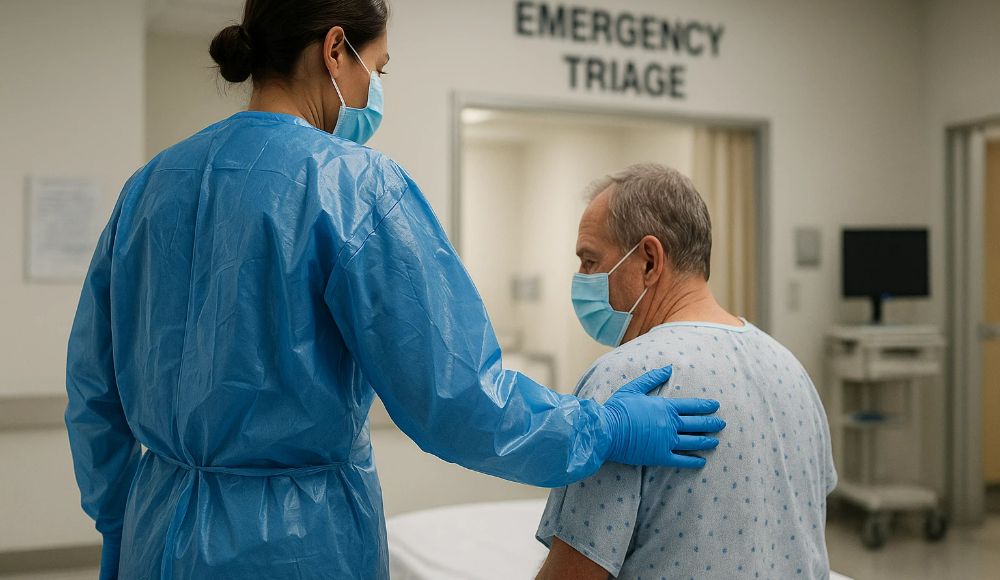
The popularity of PE isolation gowns stems from reliable liquid resistance in the very scenarios that most frequently challenge bedside teams: quick blood draws with unpredictable splash, wound irrigation in the ED, or bedside procedures where drape, coverage, and ease of removal matter. In Level 2–3 environments, a properly labelled and constructed PE or PE‑coated gown offers a consistent, repeatable barrier without the weight or cost of surgical attire. Equally important, these gowns integrate smoothly with existing don/doff training and storage systems, reducing friction during peak census or surge conditions. When clinical leaders talk about dependable PPE, they often mean a Class I, non‑surgical disposable isolation gown with a clear PB70 label, robust seams, and predictable fit—exactly the territory where PE solutions perform well.
Applications in healthcare with a Level 2–3 focus
Procurement is ultimately about matching typical tasks to barrier needs. For phlebotomy, suturing in minor procedures, and select ICU or pathology workflows where splashes are possible but soak‑through is unlikely, a Level 2 gown is commonly selected when documentation confirms both fabric and seam performance. In higher‑acuity ER care, when clinicians anticipate more forceful fluid exposure or prolonged proximity to wet fields, Level 3 offers a margin that teams appreciate, provided the gown retains comfortable mobility for longer wear. Across these use cases, back coverage and closure style matter as much as material choice, because any gap that compromises the whole garment undermines the AAMI rating that practitioners are relying on.
References you can trust while evaluating gowns
For clear definitions of gown categories, regulatory classes, and labelling expectations, the FDA’s Medical Gowns overview remains the canonical public reference. When it comes to interpreting AAMI PB70 in practice, CDC/NIOSH’s standards page explains why isolation gowns treat the entire garment as a critical zone and why open‑back designs can’t be rated, and the CDC PPE‑Info Class 4 note reminds buyers not to equate water resistance tests with viral penetration resistance. Teams building internal SOPs often cite the CDC/NIOSH selection guidance to align clinical expectations with procurement documentation and to reduce ambiguity during audits. For brand‑context reading on levels and terminology, the INTCO knowledge hub provides a concise overview suitable for onboarding materials.
FAQ
What is a PE isolation gown, and how is it different from SMS or PP‑coated options?
A PE isolation gown relies on polyethylene film for its liquid barrier, while coated PP (often called SPP+PE) bonds a thin PE layer to a nonwoven substrate to balance barrier and comfort. SMS fabrics use spunbond‑meltblown‑spunbond layers to achieve breathability with adequate liquid resistance in the lower AAMI levels. Your choice depends on wear duration, splash intensity, and documentation confirming that the full garment—including seams—meets the claimed level.
How do I read AAMI PB70 labels without the proprietary tables?
Confirm that the label states an AAMI PB70 level for an isolation gown and verify that lot‑specific test reports include AATCC 42 and 127 for Levels 1–3 or ASTM F1671 for Level 4, with seam performance documented. Cross‑reference the FDA’s Medical Gowns overview and CDC/NIOSH standards pages to ensure your interpretation matches agency guidance.
PE vs CPE isolation gown: which should we use for Level 2–3?
Both PE and CPE film gowns can provide reliable splash protection for short tasks. For longer wear or when comfort matters more, many buyers prefer PE‑coated polypropylene because the nonwoven base improves drape and feel. Regardless of film type, insist on clear PB70 labelling, whole‑garment coverage, and seam integrity appropriate to Level 2–3.
Why are PE isolation gowns widely used in healthcare units like the ED?
They offer dependable liquid resistance for common splash scenarios, are easy to don and doff, and come in a range of constructions that meet Level 2–3 needs. When documentation is complete and construction is sound, PE solutions provide a predictable balance of protection and usability for busy units.
What should a procurement file include when onboarding a new isolation gown supplier?
Include the product’s AAMI PB70 level and intended use, accredited lab reports that cover AATCC 42/127 (or ASTM F1671 for Level 4), seam performance data, design coverage notes, ISO 13485 credentials where applicable, and a summary of clinical feedback from wear trials. Capture this once and maintain it for each lot verification cycle.
Where can I find authoritative references to support our selection SOP?
Use the FDA’s Medical Gowns page for regulatory framing and the CDC/NIOSH standards and selection guidance for critical zone definitions and test interpretations. These sources provide stable, agency‑level language that auditors and clinicians recognise.
How do manufacturer credentials factor into our risk assessment?
They don’t replace test results or proper labelling, but they help you gauge quality system maturity and supply resiliency. A well‑documented PE isolation gown supplier that provides timely lot reports and consistent construction details reduces rework and improves compliance during periodic reviews.