


 Medical Consumables
  Rehabilitation Equipment
  Physical Therapy
  Patient Monitoring & Electrosurgery
  Personal Care



A few stray hairs can carry skin squames and particles that don’t belong anywhere near sterile fields, clean assemblies, or open food. That’s why many facilities rely on single-use head coverings to keep hair contained and reduce shedding in sensitive zones. This news-style guide explains what a disposable mob cap is, how it compares with other headwear, where it’s commonly used, what materials it’s made from, and how to specify and implement it responsibly. We’ll keep the guidance conservative and standards-aware, recognising that policies vary by country and institution. If you’re evaluating options or updating attire policies, here’s a practical, evidence-informed place to start.
What is a disposable mob cap?
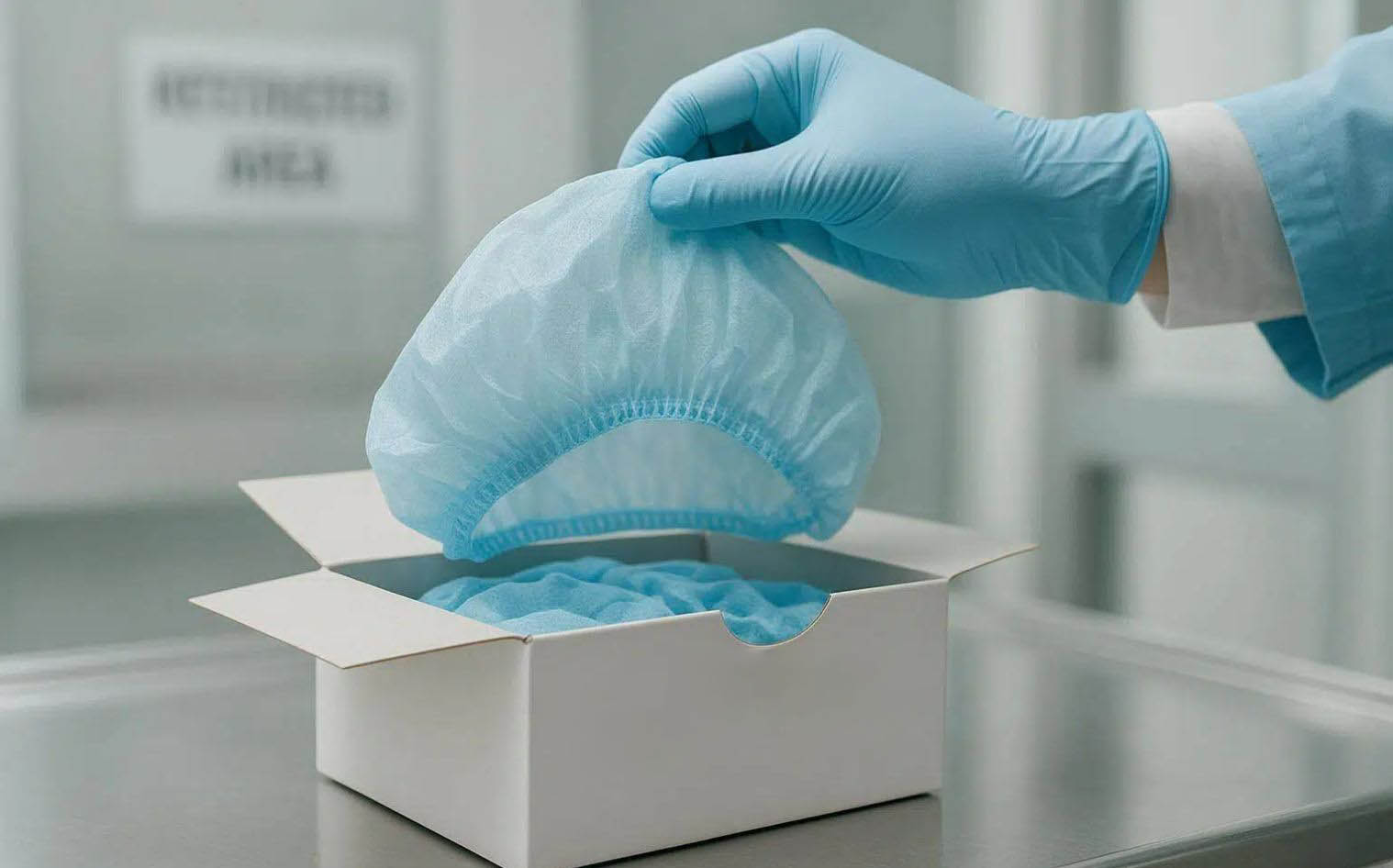
A disposable mob cap is a lightweight, elasticised head covering made from nonwoven fabric that gathers around the head to confine hair and minimise particle release. In day-to-day language, the terms “mob cap,” “bouffant cap,” and “disposable medical cap” are often used interchangeably. The bouffant profile has a puffed, gathered shape that accommodates different hair volumes, while hood-style head coverings extend down the sides and nape to cover ears and often part of the neck for higher-risk areas. These products are intended for one-time use to reduce cross-contamination; once you leave the restricted environment or the cap becomes soiled, it should be discarded in accordance with local waste procedures.
Mob cap vs bouffant cap vs hooded designs
The difference between a mob cap and a bouffant cap is more about usage conventions than hard technical lines. In many markets, “bouffant cap” signals the rounded, puffed silhouette you see in perioperative and clean manufacturing roles. “Mob cap” is a broader, everyday label for elasticised caps used in healthcare, laboratories, and food handling. Hooded designs—sometimes called “non-woven hood cap” styles—extend coverage to the ears and nape and can be specified by facilities that want more complete hair containment in operating rooms or cleanrooms. Selection should be driven by the facility’s policy and the work being performed: the tighter the contamination control needed, the more complete the coverage you’ll typically choose. Fit and comfort still matter because caps may be worn for hours; a secure elastic that doesn’t pinch and a breathable fabric can make or break staff acceptance.
Materials of disposable mob caps and comfort for long wear
Most disposable caps use polypropylene-based nonwovens. Spunbond polypropylene (often abbreviated SBPP) provides a breathable, low-lint fabric that’s comfortable against skin for general tasks. For areas that want a bit more barrier performance without sacrificing airflow, SMS—short for spunbond–meltblown–spunbond—layers a fine filtration middle between two durable outer webs. Academic reviews describe why polypropylene dominates many single-use protective textiles: it’s lightweight, hydrophobic, and can be engineered into nonwoven structures that balance breathability with filtration and fluid resistance for healthcare PPE, as summarised in the open-access review “Advancement of Nonwoven Fabrics in Personal Protective Equipment”.
Elastic design and sizing contribute just as much to user experience as the fabric. Caps are typically offered in diameters like 18, 21, or 24 inches to accommodate different hairstyles and volumes. A covered elastic rim helps distribute pressure evenly, reducing marks on the skin. Many buyers also ask about latex-free construction to support sensitive wearers; polypropylene nonwovens themselves are latex-free, and reputable suppliers can confirm that elastics and other components are suitable for those with latex sensitivities. If your teams wear caps through long shifts, trialling a couple of sizes and elastic tensions before finalising a bulk order can head off complaints later.
Disposable mob cap use in healthcare and controlled environments
Policies and expectations differ by setting. In perioperative and sterile processing areas in the United States, professional guidance emphasises complete hair containment in semi-restricted and restricted spaces. The Association of periOperative Registered Nurses provides attire guidance indicating that head coverings in those areas should fully cover the scalp, hair, ears, sideburns, nape of the neck, and facial hair as appropriate, reflecting an evidence-informed approach to reducing particle shedding without prescribing a single headwear type, as outlined in AORN’s surgical attire resources and evidence tables available through their guideline library. For general clinical care, infection-prevention frameworks from national public health authorities focus first on standard and transmission-based precautions, hand hygiene, and environmental cleaning; routine headwear is not universally required unless dictated by procedure or local policy. CDC maintains a comprehensive infection control guidance library that facilities consult when building policy frameworks across care settings. That’s why you’ll see head coverings mandated in some zones and optional in others.
Outside healthcare, contamination control needs can be just as strict. Cleanrooms and electronics assembly areas often require low-lint head coverings to help manage particle loads set by facility classification, while food-handling operations in the United States must follow hair-restraint rules to keep hair and dandruff out of food and food-contact surfaces. The U.S. Food and Drug Administration’s Food Code contains clear “Hair Restraints” provisions for retail and food service that operators rely on when designing their attire policies for kitchens and production lines. For regulatory clarity in U.S. healthcare purchasing, surgical caps and similar disposable hair covers are generally treated as Class I devices that are exempt from premarket notification under the FDA’s product classification for surgical caps (product code FYF), while still subject to general controls.
The practical takeaway is straightforward: align headwear to the task and the zone. When in doubt, check your local policy and use the most conservative interpretation for high-risk procedures or tightly controlled areas. If your facility updates policies periodically, plan training refreshers so that new hires and contractors follow the same rules.
Procurement, specifications, and supply continuity
If you’re preparing a request for proposal or evaluating quotes, start with the intended use and the environments where the caps will live. For light-duty general tasks, SBPP in common diameters may be sufficient; for higher-control areas, consider SMS or hooded designs and document why. Ask suppliers for confirmation of latex-free components, available sizes and colours for any area-based colour coding, low-lint construction for controlled environments, and packaging formats that suit your dispensing workflow. Many buyers also look for quality management credentials such as ISO 9001 and ISO 13485 at the manufacturer level, along with device listings or declarations appropriate to the market. When reviewing a potential supplier’s broader PPE scope, you can scan an adjacent product family like the INTCO glove portfolio to understand scale and vertical integration without making assumptions about headwear specifics. For corporate credentials and manufacturing footprint summaries, the about INTCO Medical page provides context on certifications and production bases that procurement teams often want to review during vendor qualification.
Where local regulations draw lines between medical devices and general PPE, clarify whether your head coverings are being purchased for medical purposes, for occupational hygiene, or for clean manufacturing. In U.S. healthcare, surgical caps and similar disposable hair covers are generally treated as Class I devices that are exempt from premarket notification, even though general controls like establishment registration and good manufacturing practices still apply, as reflected in the FDA’s product classification for surgical caps (FYF). That distinction helps explain why technical datasheets and quality documentation, not individual device clearances, tend to anchor purchasing decisions for these products. In food service, the FDA’s Food Code hair restraint provisions are the compliance lodestar; in cleanrooms, compatibility with the site’s particulate and cleanliness classification drives the spec.
Where INTCO Medical fits in your head-cover strategy
As a global manufacturer of medical consumables and related protective products, INTCO Medical supplies single-use head coverings among other essentials, supported by large-scale production across multiple sites and rigorous quality systems. If your organisation wants to assess corporate scope and compliance posture as part of supplier due diligence, you can begin with INTCO Medical to review portfolio breadth and international presence before requesting product-level datasheets and samples tailored to your environment.
Implementation tips: donning, doffing, and disposal
Head coverings work best when they’re handled with the same care you give other personal protective equipment. Perform hand hygiene before touching a cap, expand and position it to fully contain hair, and avoid unnecessary surface contact while adjusting. When leaving a restricted area or when a cap becomes damp or soiled, remove it with minimal contact—back to front is a common approach—discard it in the appropriate waste stream, and clean your hands again. Facilities often include head coverings early in their donning sequences and pair removal with other PPE doffing steps, with hand hygiene between each move. A brief refresher during shift huddles or onboarding can reinforce good habits and reduce recontamination risks. For policy alignment across care settings, facilities frequently consult the CDC’s infection control guidance library, and perioperative teams may reference attire expectations summarized in AORN’s surgical attire guideline materials and associated evidence tables.
FAQ
What is a disposable mob cap?
It’s a single-use, elasticised nonwoven head covering designed to contain hair and reduce particle shedding in environments where contamination control matters, such as perioperative areas, laboratories, cleanrooms, and food-handling operations.
Is there a difference between a mob cap and a bouffant cap?
In common usage, “mob cap” is a general term, while “bouffant cap” describes the rounded, puffed profile widely used in healthcare and clean manufacturing. Both aim to contain hair; facilities select styles based on coverage expectations and comfort.
What materials are most common for disposable head coverings?
Polypropylene nonwovens dominate. Spunbond polypropylene (SBPP) is lightweight and breathable, while SMS (spunbond–meltblown–spunbond) adds a filtration layer for enhanced barrier properties without sacrificing comfort.
Do disposable mob caps reduce surgical site infections?
Evidence does not show that one headwear style consistently alters SSI rates by itself. Professional guidelines emphasise complete hair containment in restricted areas and a layered infection-prevention program that includes hand hygiene and environmental controls.
Are disposable caps required in all healthcare areas?
No. Requirements vary by institution, procedure type, and jurisdiction. Perioperative and sterile processing areas commonly require full hair coverage; general clinical areas may not, unless specified by local policy or specific tasks.
Are these caps suitable for food hygiene?
Yes. Hair restraints are called for in U.S. food service and retail operations under the FDA Food Code. Operators select hairnets or caps that meet their contamination control and comfort needs.