


 Medical Consumables
  Rehabilitation Equipment
  Physical Therapy
  Patient Monitoring & Electrosurgery
  Personal Care



For Japanese retail and e‑commerce buyers—and for overseas distributors and brand managers entering Japan’s home-use market—this guide explains how to evaluate, source, and responsibly position disposable polyethylene (PE) aprons for everyday kitchen prep and household chores. You’ll find material basics, a conservative compliance primer tailored to Japan, buyer-ready specification tables, disposal pointers with municipal examples, and a neutral view on disposable versus cloth aprons.
What is a PE apron? Materials and types
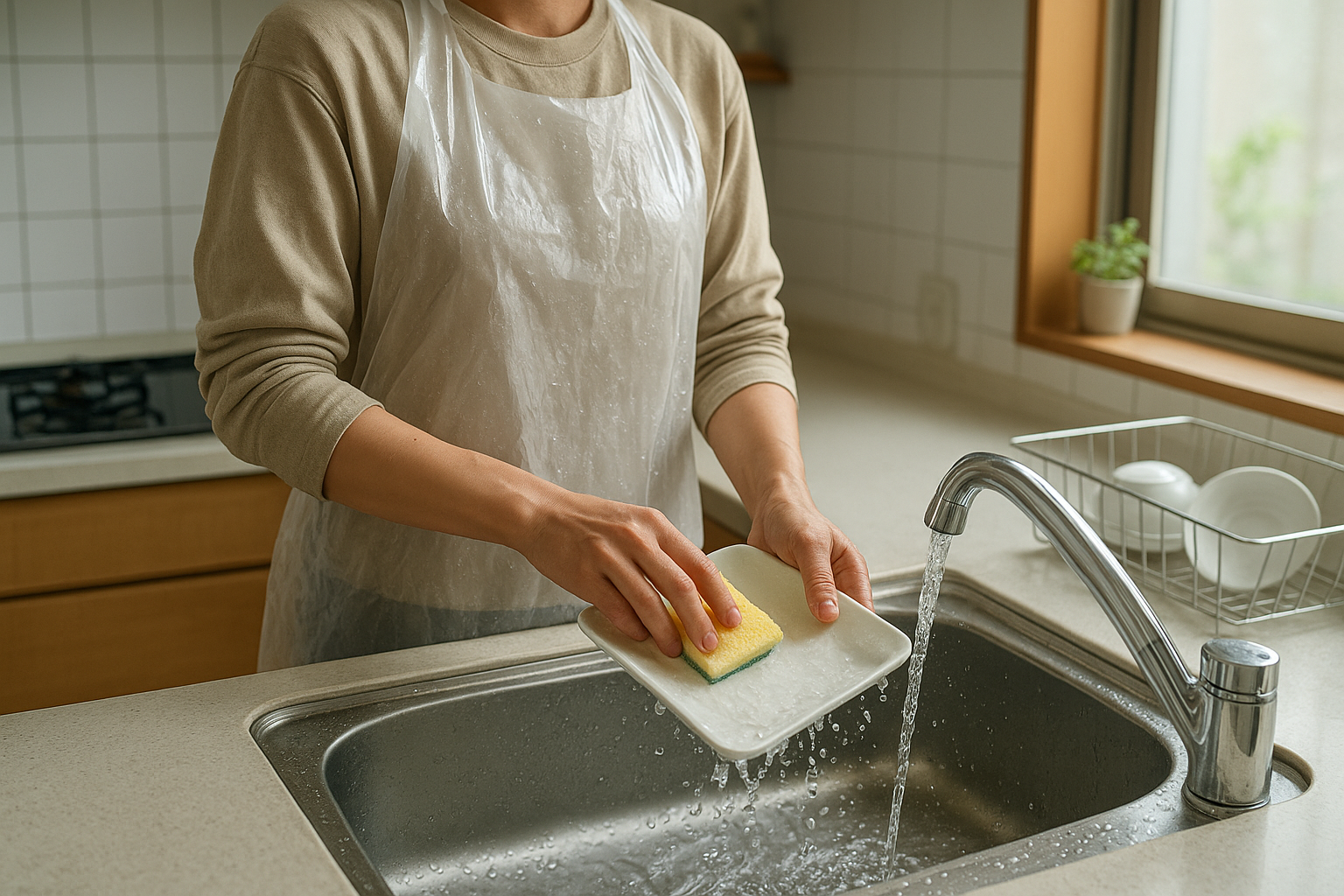
A PE apron is a lightweight, waterproof, oil‑resistant disposable garment commonly used in kitchens, food service, and light household cleaning. In the home context, its job is simple: provide a hygienic splash and stain barrier during cooking, dishwashing, or chores, then get discarded to avoid residue carryover.
Most disposable PE aprons are made from thin film in one of three families:
-
HDPE (high‑density polyethylene): crisp feel, good light‑duty splash protection, economical.
-
LDPE (low‑density polyethylene): softer hand‑feel, drapes more easily.
-
CPE (cast polyethylene): often a little thicker with a textured surface option for grip.
Below is a quick buyer’s reference.
|
Film type |
Typical thickness (µm) |
Common sizes (cm) |
Surface |
Common colors |
Packaging norms |
Typical home uses |
|---|---|---|---|---|---|---|
|
HDPE |
10–20 |
120×73; 140×75 |
Smooth or light emboss |
White, blue |
100/bag × 10 bags/carton |
Light kitchen prep, dishwashing, general splash protection |
|
LDPE |
12–30 |
120×73; 140×75 |
Smooth or embossed |
White, blue, assorted |
100/bag × 10 bags/carton |
Food prep with sauces/oils, light cleaning |
|
CPE |
20–50 |
120×73; 140×75 |
Smooth or textured |
Multiple |
100/bag × 10 bags/carton |
Greasier tasks, longer wear time |
Notes for B2B buyers:
-
Sizes listed (e.g., 120×73 cm, 140×75 cm) and pack formats (100/bag × 1,000/carton) are common market conventions and can be customized by manufacturers.
-
“Standard” household and retail‑kitchen grades often fall in the 10–25 µm range; heavier 30–50 µm options exist for tougher, greasier chores.
Why Japanese households and retailers choose disposable PE aprons
Think of a PE apron as a clean slate you can put on in seconds. In kitchens where raw proteins, sauces, or dishwater splashes are part of daily life, a disposable layer helps reduce the chance of carrying oils or residues from one task to the next. It’s not a silver bullet—good handwashing and clean utensils still matter—but it’s a pragmatic tool that supports everyday hygiene.
Convenience is the second draw. Because these aprons are ultra‑light and packed in volume, they’re easy to store at home, in retail kitchen stations, or at event counters. After use, they’re removed and discarded, eliminating laundering time and avoiding the “Did we wash this thoroughly enough?” question that can follow reusable cloth aprons.
For the Japanese home context, disposal practices are another factor. Many municipalities provide distinct rules for plastic resources versus burnable trash; thin PE items may be directed differently depending on cleanliness and local criteria. This is one reason single‑use aprons feel “low‑friction” in daily routines—provided the household follows its city’s guidance (examples below).
Japan compliance primer: Food Sanitation Law Positive List (high level)
If your PE apron is intended for food preparation contexts where food contact might occur (e.g., occasional touch while handling washed produce), Japan’s Food Sanitation Law introduced a Positive List (PL) system for synthetic resins that governs what substances are permitted in food‑contact utensils, containers, and packaging. The Ministry of Health, Labour and Welfare provides an official overview in Japanese explaining the PL concept and its legal basis under the Food Sanitation Act amendments. See the ministry’s explainer in Japanese at the official MHLW page: the MHLW Positive List overview.
Reputable regulatory summaries align on the system’s structure and timing. Industry reports note that the PL framework took legal effect in 2020 with full enforcement for synthetic resins by mid‑2025; manufacturers and importers are responsible for ensuring materials comply and for maintaining documentation for downstream users.
What to ask suppliers (conservative checklist):
-
Intended use statement (e.g., “household kitchen prep apron—incidental food contact” or “non‑food‑contact cleaning apron”).
-
Material declaration identifying the base polymer family (HDPE/LDPE/CPE) and additive systems in scope of the PL where applicable.
-
If food contact is intended or reasonably foreseeable, request evidence of compliance under Japan’s Positive List (e.g., supplier declaration aligned to the PL, and migration/specific requirement test summaries where relevant).
-
Quality system credentials (e.g., ISO 9001/13485) as general manufacturing maturity indicators—note these are not proof of PL compliance by themselves.
Choosing the right PE apron for Japanese kitchen prep and daily chores
For home kitchens and retail food stations, the right PE apron balances comfort, splash protection, and cost. Here’s how to decide:
-
Thickness: Standard household work (vegetable prep, light frying splatter, dishwashing) often suits 10–25 µm film. Opt for 30–50 µm if tasks are longer or oilier.
-
Size and coverage: Common lengths of ~120–140 cm and widths in the low‑70 cm range offer adequate torso coverage for most adults without impeding movement.
-
Surface/embossing: Light emboss or a cast/textured surface reduces cling and helps with donning when hands are damp.
-
Color: White or translucent blue are typical for kitchens; color‑coding (e.g., blue for raw prep, white for serving) can support basic segregation in retail or community kitchens.
-
Packaging format: 100/bag × 10 bags/carton (1,000/carton) is efficient for retail and online fulfillment; individually wrapped options serve hygiene‑sensitive stations.
Disposable vs. cloth aprons: practical pros and cons for home and retail kitchens
Disposable PE apron (pros):
-
Always starts clean; helps reduce carryover concerns between tasks.
-
No laundering; predictable per‑use cost that’s easy to model for retail stations.
-
Splash and oil resistance appropriate to light‑to‑moderate tasks.
Disposable PE apron (trade‑offs):
-
Generates waste; households must follow local sorting/disposal rules.
-
Not designed for heat resistance or heavy abrasion.
Cloth apron (pros):
-
Reusable; potentially lower waste footprint if laundered efficiently.
-
Often more comfortable for long wear and multi‑pocket utility.
Cloth apron (trade‑offs):
-
Requires proper laundering and drying between uses to be “clean” again; oil stains can persist and transfer.
-
If laundering is inconsistent, hygiene benefits diminish.
Authoritative guidance in adjacent settings (e.g., care homes and food service) generally advises wearing clean outer garments and, where appropriate, disposable aprons to limit contamination risks, without making numeric efficacy claims. See the UK Food Standards Agency’s care‑home materials for how “clean or disposable” garments are framed in practice: FSA “Safer Food, Better Business” pack (care homes).
Disposal in Japan: how households typically handle thin PE items
Japan’s waste sorting and disposal rules are set at the municipal level, so households should always check local guidance. Two examples illustrate how instructions can differ or depend on cleanliness:
-
Yokohama City’s English guidance explains that plastic containers and packaging (“Plastic resources”) should be rinsed/wiped and placed in transparent or semi‑transparent bags; items that don’t meet criteria may be directed to burnable garbage. See Yokohama’s sorting and disposal guide.
-
Tsukuba City’s English guide notes that plastic containers/packaging with the プラ mark should be cleanly sorted for plastic collection and refers residents to district calendars. See Tsukuba’s official guide.
Household note: Thin PE aprons used strictly for cooking splash protection may be cleaned and sorted with plastics in some municipalities if free of residue; oil‑soiled or food‑soiled items may be directed to burnable waste in others. When in doubt, follow your city’s latest instructions.
Supplier landscape and sourcing options (with a neutral example)
You have three common routes:
-
Domestic distributors/retail wholesalers stocking standard sizes and colors (fast delivery, limited customization).
-
Importers and private‑label brand partners who manage compliance documentation and packaging for Japan retail.
-
Direct manufacturers for custom specs, colors, and private‑label at volume, typically with MOQs.
As one example of a global manufacturer supplying polyethylene aprons in multiple film types and sizes, see INTCO Medical’s public product overview, which lists HDPE/LDPE/CPE options, common sizes (e.g., 120×73 cm; 140×75 cm), colors, and typical pack formats. This mention is for context only; buyers should request Japan‑specific intended‑use and compliance documentation directly from suppliers as appropriate.
Related protective items for kitchen and chores (for buyers offering full home kits):
-
Disposable HDPE Gloves for food prep and cleaning tasks.
-
Disposable Vinyl Gloves with food‑handling suitability noted on the product page.
Short scenarios from the field
-
Supermarket deli counter (retail kitchen): Staff rotate single‑use PE aprons between raw prep and ready‑to‑eat service to reinforce separation. A 20–25 µm embossed apron reduces cling when hands are damp from frequent washing. After each shift, used aprons follow the store’s waste‑sorting SOP aligned to municipal rules.
-
Family hot‑pot night (home kitchen): A pack of standard 120×73 cm aprons sits in a drawer. Aprons go on before chopping greens and slicing tofu to avoid splash marks on clothing. After the meal, lightly soiled aprons are handled according to the city’s guidance (some municipalities allow clean plastic packaging in dedicated collections; others may direct soiled items to burnable trash).
-
Home‑care agency visit (domestic chores): Care staff use single‑use PE aprons when handling laundry sorting and light cleaning. The team stocks individually wrapped options for bag hygiene during transit. Supervisors audit that used aprons are discarded according to local instructions at each residence.
FAQ for Japanese buyers
-
Are PE aprons “food safe” in Japan?
-
Safety and compliance depend on the specific product’s materials and intended use. For items intended for food‑adjacent contexts, request documentation aligned to Japan’s Positive List system. Refer to the MHLW Positive List overview for the regulatory basis.
-
-
What thickness should we choose for household‑targeted retail packs?
-
For general kitchen prep and dishwashing, 12–20 µm is a common starting point. Offer a heavier 25–30 µm SKU for oilier cooking or longer wear time.
-
-
Do colored aprons affect compliance?
-
Colorants and additives are part of the material system; for food‑adjacent uses, suppliers should ensure substances are permitted under the Positive List and provide declarations accordingly.
-
-
Can PE aprons be recycled in Japan?
-
It depends on local rules and the apron’s cleanliness. Many municipalities collect clean plastic containers/packaging separately; soiled items may be routed to burnable waste. Check the city’s official guidance.
-
-
What pack sizes sell best online?
-
For home use, 100‑count packs with clear labeling perform well; some sellers also offer 50‑count or 200‑count variants. For retail back‑of‑house, cartons of 1,000 (100×10) are efficient.
-