
















































Previous
12-Lead ECG Electrode Placement: Best Practices for Clinical Accuracy in Healthcare


In professional environments where hygiene,
protection, and precision are non-negotiable, the selection of the right glove
material plays a crucial role in ensuring both safety and productivity. Over
the years, synthetic materials such as nitrile and neoprene have become the
leading alternatives to traditional latex, each offering distinctive
advantages. The ongoing comparison of neoprene vs nitrile gloves continues to shape safety standards across healthcare, manufacturing, and
laboratory sectors. Understanding their unique properties helps organisations
choose gloves that enhance worker comfort and operational safety. At INTCO
Medical, we constantly upgrade our materials and technology to meet evolving
demands in safety, sustainability, and comfort.

Understanding Nitrile Gloves: The Modern
Industry Standard
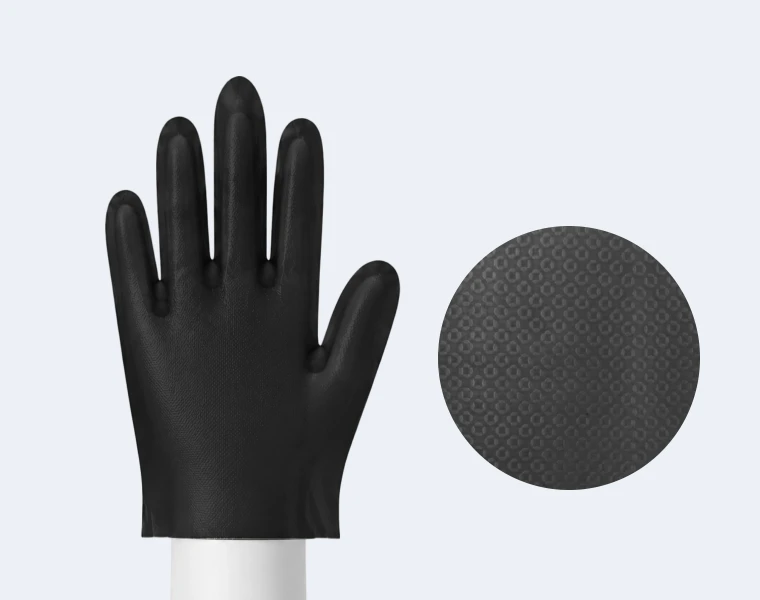
Nitrile gloves are now widely recognised as
the preferred choice in healthcare, laboratory, and industrial settings. Made
from a synthetic rubber copolymer of acrylonitrile and butadiene,
nitrile offers outstanding strength and chemical resistance. One of the most
notable benefits is that it is completely latex-free, eliminating the risk of Type
I latex allergies—a factor that the U.S. Food and Drug Administration (FDA) highlights as a major advantage in medical applications.
The material’s dense molecular structure
provides excellent protection against punctures, tears, and abrasions, often
surpassing latex by threefold. This superior toughness is essential in
environments where contact with blood-borne pathogens or sharp instruments is
common. Moreover, nitrile stands out for its resistance to oils, fuels, and
petroleum-based solvents, making it equally valuable in automotive repair,
industrial cleaning, and food processing.
Recent advancements in glove manufacturing
have allowed for thinner, softer, and more flexible nitrile formulations,
delivering the dexterity healthcare and laboratory professionals require
without sacrificing durability or safety.
Exploring Neoprene Gloves: Flexible and
Chemically Resilient
Neoprene gloves, made from polychloroprene,
have long been appreciated for their remarkable elasticity and ergonomic
comfort. Unlike many other synthetic rubbers, neoprene offers a snug,
“second-skin” fit that reduces hand fatigue during long hours of work. This
flexibility makes them ideal for applications demanding precise hand control,
such as electronics assembly, laboratory testing, and pharmaceutical handling.
What truly distinguishes neoprene is its broad
chemical resistance profile. While nitrile dominates in oil and fuel
resistance, neoprene performs exceptionally well against acids, bases,
alcohols, and caustic chemicals. According to OSHA (Occupational Safety and
Health Administration), the effectiveness of a glove largely depends on the
specific chemicals being handled, and neoprene fills the gap where nitrile may
fall short.
Additionally, neoprene’s resilience to heat,
sunlight, and weathering makes it a reliable choice for both indoor and outdoor
industrial operations.
Nitrile vs Neoprene: Key Differences
That Matter
When comparing nitrile vs neoprene gloves,
the decision should be based on job-specific risks rather than a single measure
of quality. Both materials offer excellent protection, but they excel in
different conditions.

Chemical Resistance
For example, an auto mechanic would benefit
more from nitrile, whereas a chemical lab technician might find neoprene the
safer choice. Reviewing the Safety Data Sheets (SDS) for your specific
workplace chemicals is essential before choosing.
Durability and Dexterity
Nitrile gloves generally outperform neoprene
in puncture and abrasion resistance, making them ideal for medical and
industrial use. However, neoprene’s superior flexibility and tactile
sensitivity make it a better fit for tasks requiring detailed manual precision.
Allergy Safety and Comfort
Both materials are latex-free, preventing Type
I latex allergy reactions. The CDC (Centers for Disease Control and Prevention)
also recommends the use of non-latex gloves to minimise sensitisation. For
users with Type IV hypersensitivity to vulcanisation accelerators sometimes
found in nitrile, accelerator-free nitrile or neoprene options provide safe
alternatives.
Which Glove Type Should You Choose?
The best glove isn’t the one that performs
best in every test—it’s the one that performs best for your specific
environment.
Safety managers should always consult
trusted sources such as the NIOSH Pocket Guide to Chemical Hazards to match
glove materials with potential risks.
INTCO Medical: Your Reliable Partner in
Hand Protection
Selecting the right gloves is only part of
ensuring safety—choosing the right manufacturer is equally vital. A reliable
supplier guarantees consistent quality, compliance with international safety
standards, and access to cutting-edge innovations.
At INTCO Medical, we combine advanced material
science with world-class manufacturing expertise to deliver gloves that
healthcare professionals and industrial workers can trust. Our portfolio
includes medical-grade nitrile gloves, industrial protective gloves, and other
safety solutions designed to meet the rigorous demands of today’s workplaces.
As a global leader in medical and
protective equipment, INTCO Medical remains committed to enhancing health and
safety through continuous innovation and sustainable manufacturing practices.
For expert advice or OEM/ODM collaboration on glove solutions tailored to your
needs, contact INTCO Medical today.


