


 Medical Consumables
  Rehabilitation Equipment
  Physical Therapy
  Patient Monitoring & Electrosurgery
  Personal Care



For anyone relying on a mobility scooter to stay independent, unexpected breakdowns can disrupt daily life and limit freedom. The key to avoiding costly repairs and ensuring your scooter serves you well for years lies in consistent mobility scooter maintenance—a routine that’s simpler than many users realize. Whether you use your scooter for daily errands, medical appointments, or weekend outings, proper care not only extends its lifespan (which can range from 3 to 10 years with good upkeep) but also keeps every ride safe and smooth. In this guide, we’ll break down actionable steps to maintain your mobility scooter, from battery care to seasonal storage, and highlight how choosing a quality model from a trusted provider like INTCO Medical can make maintenance even easier.
Why Regular Mobility Scooter Maintenance Matters
Mobility scooters are more than just transport—they’re a lifeline to independence, allowing users to move freely without relying on others. Yet, neglecting basic maintenance can shorten their lifespan dramatically. A scooter that’s not cared for may experience battery failure, worn tires, or stuck moving parts, leading to unexpected downtime and expensive repairs. For example, a poorly maintained battery might need replacement in just 6–12 months, while a well-cared-for one can last up to 24 months, according to industry experts.

Regular maintenance also ensures safety. Worn brakes or underinflated tires can increase the risk of accidents, especially on uneven terrain or busy sidewalks. By investing a few minutes each day and an hour each month in simple checks, you can prevent these issues and keep your scooter running at peak performance. Additionally, proper care helps preserve the value of your investment, which is especially important if you ever need to upgrade or sell your scooter later.
Key Areas to Focus On for Longevity
Not all maintenance tasks are equal—some are critical to daily safety, while others prevent long-term wear. The most important areas to prioritize include battery health, tire and brake function, cleaning, and lubrication of moving parts. These components work together to keep your scooter operational, and neglecting any one of them can lead to cascading issues. For instance, a dirty battery terminal can cause poor power flow, which strains the motor and shortens its life. Similarly, worn brake pads can reduce stopping power, putting you at risk when navigating hills or busy areas. By focusing on these core areas, you can create a maintenance routine that’s efficient and effective, without overwhelming yourself with complex tasks.
Essential Mobility Scooter Maintenance Tips
Battery Care: The Heart of Your Scooter
The battery is the most frequently replaced part of a mobility scooter, but it’s also the easiest to protect with simple habits. First, always charge the battery after every use—even if you only took a short trip. Partial charges help keep the battery cells active and prevent deep discharge, which can damage the battery over time. Avoid overcharging, too: once the battery reaches full capacity (usually indicated by a green light on the charger), unplug it to prevent overheating.
Store your scooter in a dry, cool indoor space to protect the battery from extreme temperatures. Cold weather can slow down battery performance, while heat can cause it to degrade faster. Every month, check the battery terminals for corrosion—if you see a white or greenish buildup, clean it gently with a soft brush and a mixture of baking soda and water. Well-maintained lithium-ion batteries, like those used in many modern scooters, can perform reliably for up to 24 months, as noted by mobility equipment specialists.
Cleaning and Storage: Protect Against Wear and Tear
Mobility scooters operate in various environments—pavement, grass, rain, and even dusty garages—all of which can cause dirt, moisture, and debris to build up. Weekly cleaning is essential to prevent corrosion and keep parts moving freely. Start by wiping down the frame, handles, and control panel with a soft, damp cloth and mild soap (avoid harsh chemicals that can damage plastic or paint). Pay extra attention to areas like folding hinges, brake handles, and wheel axles, where dirt can accumulate and cause jams.
Never use a power washer or spray water directly on the scooter’s electronics, as this can short-circuit the motor or control system. After cleaning, dry the scooter thoroughly with a towel to prevent moisture from seeping into moving parts. When storing your scooter long-term (such as during a season you won’t use it), cover it with a breathable cloth to protect it from dust and direct sunlight. Storing it in a climate-controlled area, like a basement or indoor garage, also helps preserve the battery and frame. For tips on choosing storage solutions that work for your scooter, you can refer to resources from mobility equipment maintenance guides (a trusted industry resource).
Brakes and Tires: Safety First
Your scooter’s brakes and tires are critical for safety, so regular inspections are non-negotiable. Test the brakes weekly—most modern scooters use electromagnetic brakes that should activate instantly when you release the throttle. If you notice a delay in stopping or a spongy feel, it’s time to have the brakes checked by a professional. For tire care, inspect the treads monthly for cracks, bulges, or uneven wear. Underinflated tires can reduce stability and increase rolling resistance, which strains the motor, so check the pressure regularly and inflate to the manufacturer’s recommended level.
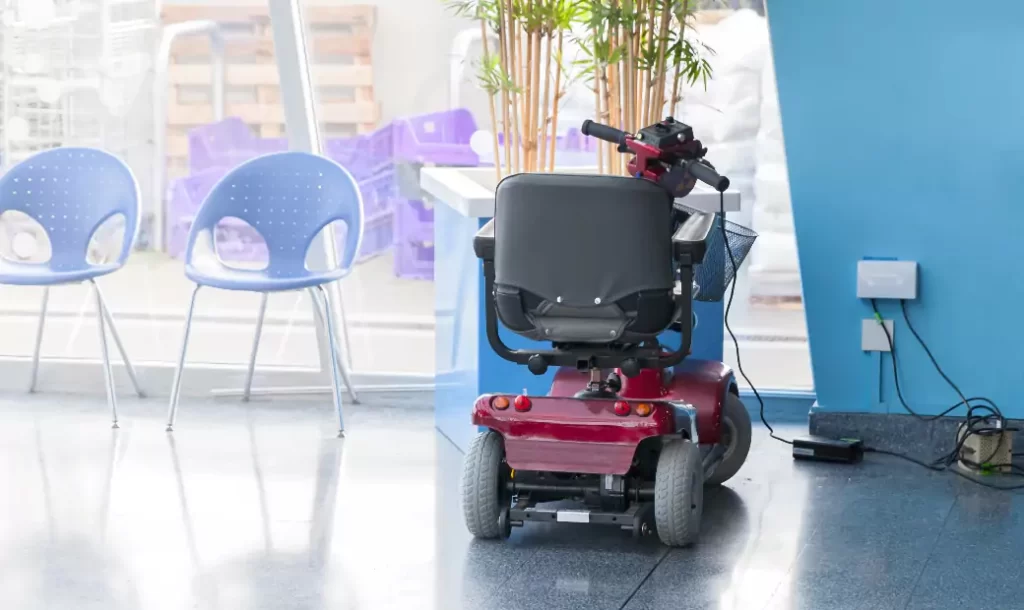
Tire rotation is another important step—aim to rotate your scooter’s tyres every 6 months to ensure even wear, which extends their lifespan. If you notice significant tread wear or damage, replace the tyres immediately to avoid accidents. Brake pad replacement should be done at least once a year or whenever signs of wear (like squeaking or reduced stopping power) appear. By staying on top of brake and tyre maintenance, you can ensure every ride is safe, whether you’re navigating busy city streets or quiet neighbourhood paths.
Lubrication: Keep Moving Parts Smooth
Mobility scooters have several moving parts—axles, seat pivots, folding joints, and control levers—that need regular lubrication to prevent friction and wear. Every 1–2 months, apply a light silicone spray or white lithium grease to these components. Be sure to wipe off any excess lubricant with a clean cloth, as leftover grease can attract dirt and cause buildup. Lubrication not only keeps the scooter running quietly but also reduces strain on the motor and extends the life of moving parts. For example, a well-lubricated folding joint will be easier to open and close, preventing damage to the frame over time. Always use lubricants recommended by your scooter’s manufacturer to avoid damaging plastic or metal components.
A Simple Mobility Scooter Maintenance Schedule
To make maintenance easy, follow a structured schedule that aligns with how often each task needs to be done. After each use, take 2–3 minutes to recharge the battery and do a quick visual check—look for loose parts, flat tires, or debris stuck in the wheels. Once a week, spend 15–20 minutes cleaning the frame, testing the brakes, and inspecting the tires. Every month, lubricate moving parts, check battery terminals for corrosion, and inspect the wiring for any signs of damage (like frayed cords or loose connections).
Every 6 months, rotate the tires and do a deeper check of the brake system—this is a good time to tighten any loose bolts or screws. Once a year, schedule a professional service with a certified technician. They can perform a comprehensive inspection, test the battery’s health, and identify any potential issues you might have missed. This annual checkup is especially important for older scooters or those used frequently, as it can catch small problems before they become major repairs.
Why Choosing the Right Mobility Scooter Simplifies Maintenance
While regular maintenance is essential, the quality and design of your mobility scooter play a big role in how easy it is to care for. Models built with maintenance in mind—like those from INTCO Medical—feature modular parts that are easy to replace, brushless motors that reduce internal wear, and durable frames made from aluminum or carbon fiber. These design elements mean fewer repairs, less frequent part replacements, and a scooter that holds up better to daily use.
For example, INTCO’s E-CARY scooter uses a lightweight carbon fiber frame that resists rust and corrosion, eliminating the need for frequent touch-ups or repairs. Its brushless motor runs quieter and lasts longer than traditional motors, while the modular design makes it easy to access and replace parts if needed. Another popular model, the LIBRA-D, features a lead-acid battery that’s simple to maintain and an ergonomic rotating seat that reduces wear on moving parts. By choosing a scooter from a reputable manufacturer with a focus on durability, you can cut down on maintenance time and enjoy greater peace of mind.