


 Medical Consumables
  Rehabilitation Equipment
  Physical Therapy
  Patient Monitoring & Electrosurgery
  Personal Care



Disposable gloves are widely used in restaurants, food factories, bakeries, supermarkets, and takeaway kitchens to reduce cross-contamination during food preparation. Among the most common options, CPE gloves and TPE gloves are frequently compared for cost, flexibility, comfort, and food handling performance.
Although both are disposable food-service gloves, they are designed for different usage scenarios. CPE gloves are often selected for short-term food handling and high-volume applications, while TPE gloves are preferred for better fit, flexibility, and longer wear time.
This guide compares CPE vs TPE gloves in real food-service environments, including restaurant prep stations, bakery counters, meat processing, and fast-food operations, helping buyers choose the right disposable gloves for their business needs.
What are CPE gloves?
CPE gloves are cast polyethylene disposable gloves. In food service, CPE usually means a loose-fit, low-cost, fast-change barrier glove used to reduce bare-hand contact with ready-to-eat foods. CPE is not designed to “stretch and hug” your hand; its value is speed and compliance at high-volume stations.
What are TPE gloves?
TPE gloves are made from thermoplastic elastomers, a family of materials designed to feel more elastic and rubber-like than poly gloves while staying latex-free. In kitchens, TPE often means a closer-fitting, stretchier disposable glove that improves dexterity for longer prep tasks.
CPE vs TPE gloves: what’s the difference?
The difference between CPE and TPE gloves is mainly in stretch and fit. CPE is typically loose and optimised for quick don/doff. TPE stretches more, so it fits better and tends to tear less in moderate-duty prep—often making it the “step up” before nitrile for messy or repetitive work.
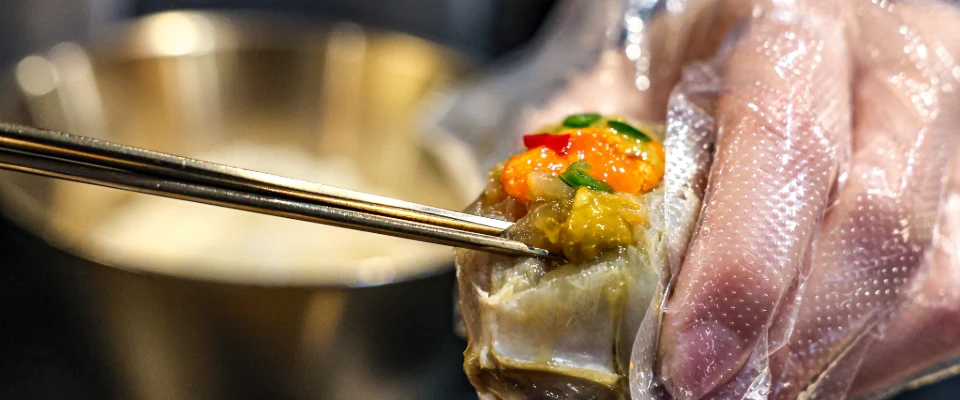
Quick Comparison: CPE vs TPE Gloves
|
Decision factor |
Winner |
Why it wins |
Typical station examples |
|---|---|---|---|
|
Fast changes |
CPE gloves |
Loose fit makes donning/doffing quick; low cost supports frequent swaps |
Cold assembly, plating, grab-and-go |
|
Fit and dexterity |
TPE gloves |
Stretchier and closer-fitting for fingertip control |
Veg prep, deli slicing, portioning |
|
Greasy handling |
TPE gloves |
Holds up better under repeated motion and oily contact than light-duty CPE gloves |
Saucing, fried foods, oily assembly |
|
Lowest cost per pair |
CPE gloves |
Usually, the cheapest option for light-duty handling |
High-volume stations with short wear time |
|
Upgrade trigger |
Nitrile gloves |
Best when TPE gloves still fail (sharp edges, long wear, heavy grease) |
Raw proteins, heavy prep, and cleaning |
Evaluation criteria 1: fit and dexterity
TPE usually wins on fit and dexterity for food prep. A closer fit improves fingertip control when you’re slicing, portioning, pinching, or handling slippery ingredients.
CPE wins on speed of change, not precision. CPE gloves are roomier by design, which makes them easy to put on and remove when a station requires constant glove changes.
If gloves feel baggy and slip during prep, switch that station to TPE. A better fit often improves compliance because workers keep gloves on for the full task instead of adjusting them mid-prep.
Evaluation criteria 2: durability and tear resistance
Tear resistance
If you’re seeing mid-task tears, TPE gloves are usually the safer pick than CPE gloves. CPE gloves are generally treated as light-duty: great for frequent changes, less great for pulling, twisting, and sharp packaging corners. TPE gloves tend to hold up better in moderate-duty prep because they stretch instead of ripping as easily.
Stretchability
Stretch is the practical reason TPE often “feels stronger.” CPE has minimal stretch, so stress concentrates at the fingertips and seams. TPE has more give, which helps it conform to your hand and reduces sudden tearing during repetitive motions.
Suitable task length
Longer prep sessions favour TPE; rapid task switching favours CPE. If a station’s workflow requires keeping gloves on for sustained prep, a closer fit reduces annoyance and re-gloving. If the workflow is constant on/off (grab, plate, change), CPE’s loose fit is an advantage.
Recommended environment
Use CPE for clean, light-duty handling; use TPE for messier, moderate-duty prep. When grease, moisture, and repetitive motions combine (deli slicing, portioning, saucing), TPE is typically the better middle ground—before you jump to nitrile.
Evaluation criteria 3: oils, grease, and messy food handling
For greasy food prep, TPE is usually more reliable than CPE. Grease + repetitive motion can trigger tearing and constant re-gloving with light-duty CPE. TPE’s stretch and closer fit often hold up better for saucing, portioning, and oily assembly.
If TPE still fails, nitrile is the upgrade. When gloves must resist heavy grease, sharp packaging, or longer wear time, nitrile typically reduces failures and re-gloving.
Evaluation criteria 4: comfort and compliance
The best glove is the one your team will actually change on time. Fast-change CPE supports task switching. Better-fitting TPE supports longer prep without constant adjusting.
Split gloves by station to increase compliance. Many kitchens place CPE where on/off speed matters and keep TPE or nitrile where dexterity and durability matter.
Evaluation criteria 5: cost and waste
Kitchen glove cost is driven by pairs used per shift, not price per pair. Every tear and every mid-task removal increases glove consumption.
The lowest total cost is the cheapest glove that doesn’t cause re-gloving. Use CPE where it stays intact. Use TPE where CPE tears. Use nitrile where TPE still fails.
TPE gloves vs nitrile: when to upgrade
If TPE feels like a good middle ground, nitrile is the “I need this to hold up” option.
Here’s when tpe gloves vs nitrile becomes an easy call in food service:
Choose nitrile when you need:
-
higher puncture resistance (bones, sharp edges, rough packaging)
-
better durability for longer wear
-
stronger resistance to oils/grease and many cleaning chemicals
Keep TPE when you need:
-
comfortable, latex-free gloves for general food handling
-
better fit than loose poly/CPE style gloves
-
a cost-conscious option that still feels decent during prep
TPE gloves vs vinyl: what’s different in practice?
Vinyl gloves are typically made from PVC (polyvinyl chloride). So when people say “vinyl,” they’re usually talking about PVC gloves.
In day-to-day terms, tpe gloves vs vinyl often comes down to feel and fit:
-
TPE: tends to be stretchier and more form-fitting.
-
Vinyl/PVC: often feels stiffer and can be looser at the fingertips, which can reduce dexterity for detailed prep.
If you’re already buying vinyl for cost reasons, TPE is commonly evaluated as an alternative when you want a better fit without paying nitrile prices.
For INTCO’s perspective on positioning and use cases, you can cross-reference their material guidance in TPE vs PVC below.
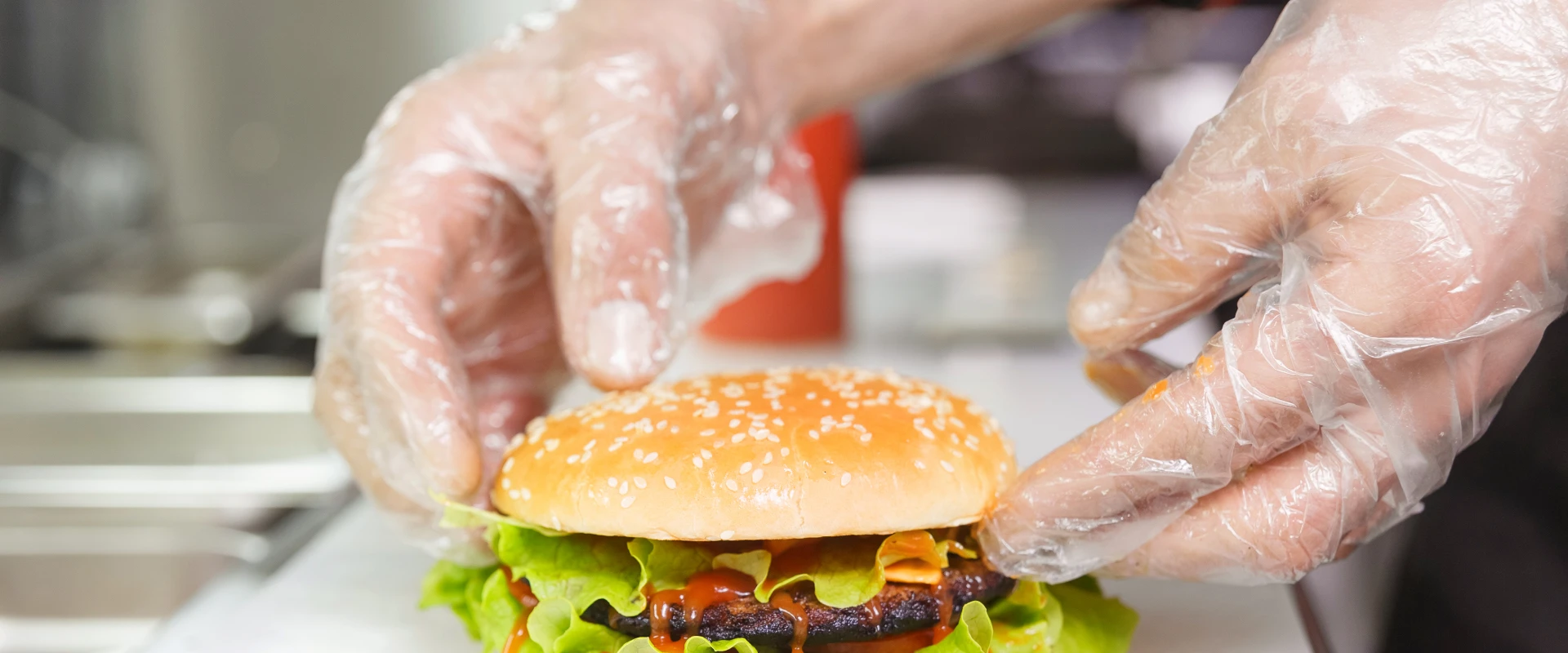
CPE vs TPE Gloves in Different Food Handling Scenarios
Different food-service environments require different disposable glove performance. Choosing the right gloves depends on factors such as food type, working duration, flexibility needs, moisture exposure, and replacement frequency.
| Food Handling Scenario | Recommended Gloves | Main Reason |
|---|---|---|
| Bakery & pastry preparation | TPE gloves | Better flexibility and grip for delicate food handling |
| Fast food assembly stations | TPE gloves | More comfortable for repetitive tasks and longer wear time |
| Meat & seafood processing | CPE gloves | Loose fit allows quick glove replacement during wet operations |
| Supermarket deli counters | TPE gloves | Better appearance and improved customer-facing comfort |
| Short-term food serving | CPE gloves | Cost-effective for high-frequency disposable use |
| Central kitchen operations | CPE gloves | Suitable for large-volume food preparation environments |
| Sandwich & salad preparation | TPE gloves | Better hand fit improves handling precision |
| Catering & takeaway packaging | CPE gloves | Fast changing efficiency reduces operational interruption |
What to stock in a restaurant: station-by-station recommendations
A simple starting playbook:
High-change stations (sandwich line, cold assembly, plating)
-
Default: CPE gloves
-
Why: fast don/doff, easy compliance, low cost
Longer prep sessions (veg prep, deli slicing, repeated portioning)
-
Default: TPE gloves
-
Why: better fit + dexterity, less annoyance during repetitive tasks
Raw proteins, greasy prep, or when you keep tearing lighter gloves
-
Default: nitrile
-
Why: durability and puncture resistance usually justify the cost
Cleaning and chemical exposure
-
Default: nitrile (or other chemical-appropriate PPE)
-
Why: you’re past “food handling”—you’re in chemical handling
If you want a manufacturer-side breakdown of TPE glove suitability and typical application scenarios, INTCO’s disposable glove category pages are a good starting point for specs and options.
Food safety reminder: Gloves don’t replace handwashing
Gloves only reduce risk when you change them at the right times. A torn, greasy, or contaminated glove is not protection.
According to the FDA Food Code, food employees should avoid bare-hand contact with ready-to-eat foods and use single-use gloves or utensils as part of retail food protection best practices. Start with the official FDA Food Code.
According to USDA food safety guidance, handwashing and preventing cross-contamination remain essential even when gloves are used. See USDA’s Clean, Separate, Cook and Chill.
⚠️ Operational rule: If gloves touch a non-food surface (phone, register, trash, face/hair), treat the glove as contaminated and replace it before touching food again.
How to Choose Disposable Food Gloves for Your Business
When selecting disposable food handling gloves, restaurants, food factories, supermarkets, bakeries, and catering businesses should evaluate more than just glove material. Operational efficiency, user comfort, food safety compliance, and replacement frequency all affect long-term purchasing decisions.
Before choosing between CPE gloves and TPE gloves, buyers should consider:
- Type of food being handled
- Duration of glove use per shift
- Frequency of glove replacement
- Wet or oily working environments
- Staff comfort during repetitive tasks
- Grip and handling precision
- Packaging and storage requirements
- Cost efficiency for bulk purchasing
- Compliance with food-contact regulations
For operations with frequent glove changes and high daily usage, CPE gloves are often preferred because of their lower cost and fast replacement convenience. For customer-facing food preparation, sandwich assembly, bakery operations, and longer wear time, TPE gloves may provide a better balance of comfort and flexibility.
In many food-service businesses, both glove types are used together in different workstations to improve operational efficiency and control overall disposable glove costs.
INTCO Medical Disposable Gloves for Food Handling
INTCO Medical supplies disposable gloves for restaurants, food processing facilities, supermarkets, bakeries, catering services, and commercial kitchens worldwide. The company offers multiple disposable glove solutions for different food handling applications, including CPE gloves, TPE gloves, PE gloves, vinyl gloves, and nitrile gloves.
Designed for food-contact environments, INTCO Medical disposable gloves support high-frequency glove replacement, efficient food preparation workflows, and large-volume commercial use. Different glove materials can be selected according to flexibility needs, cost targets, and operational requirements.
With global manufacturing capacity, OEM support, and export experience across more than 150 countries and regions, INTCO Medical helps distributors and food-service brands source compliant disposable glove solutions for various food-service scenarios.
References and standards to know
If you need to justify glove policies (or evaluate supplier claims), these are commonly used authority sources:
-
FDA: FDA Food Code for retail food safety best practices, including minimising bare-hand contact with ready-to-eat foods.
-
USDA: Clean, Separate, Cook and Chill for cross-contamination and hand hygiene reminders.
-
ASTM: ASTM D6319 nitrile exam glove specification for performance requirements commonly referenced for nitrile medical exam gloves.
-
ASTM: ASTM D6978 chemo drug permeation assessment for a widely cited chemical permeation testing practice in medical glove selection.
-
ISO: ISO 374-1 protective gloves against dangerous chemicals for chemical protective glove terminology and performance requirements.
These standards don’t “pick a winner” between CPE and TPE for food handling—but they are strong, citation-friendly references for procurement teams building a glove spec and compliance checklist.
Expert recommendation for food service buyers
At INTCO Medical, we generally recommend matching glove material to the workflow, not trying to force one glove to do every station. In practice, that means stocking CPE for high-change stations where speed and cost drive compliance, and stocking TPE where workers need a better fit for longer prep. When a station involves sharp edges, heavy grease, or long wear time, it’s usually more reliable to step up to nitrile rather than pushing lighter gloves past their comfort zone.
About INTCO Medical
INTCO Medical manufactures and supplies disposable gloves and other medical consumables for global customers. If you’re building a station-based glove program for restaurants, catering, or commercial kitchens, INTCO’s product resources can help you compare material options and align on specs and certifications.
Next steps
If you’re standardising glove types across stations, it helps to align on a simple spec checklist (size range, thickness targets, texture, cuff length, packaging).
To compare options with a manufacturer that produces multiple glove materials, you can reach out via the INTCO Medical contact page and ask for foodservice-oriented recommendations by station.
FAQ
Are TPE gloves food safe?
Yes. TPE gloves are commonly used for food preparation, takeaway packaging, bakery operations, and fast-food handling. Food-grade TPE gloves are designed for direct food contact in many commercial food-service environments.What gloves are commonly used in restaurants?
Restaurants often use multiple disposable glove types depending on the task. TPE gloves are commonly used for sandwich preparation and customer-facing operations, while CPE gloves are widely used for quick food serving and high-frequency glove replacement.Are CPE gloves suitable for meat processing?
CPE gloves are commonly used in meat and seafood processing because their loose fit allows workers to replace gloves quickly in wet and fast-paced working environments.Which gloves are better for greasy food handling?
TPE gloves generally provide better grip and flexibility when handling greasy or oily foods. Their softer material improves hand movement during food preparation tasks.Can TPE gloves replace vinyl gloves in restaurants?
In many food-service scenarios, TPE gloves are increasingly being used as an alternative to vinyl gloves because they offer better flexibility, softer hand feel, and improved comfort for short-term food preparation.What disposable gloves are commonly used in bakeries?
Bakeries often use TPE gloves for pastry preparation, bread handling, cake decoration, and sandwich assembly because they provide better flexibility and handling precision for delicate food items.