


 Medical Consumables
  Rehabilitation Equipment
  Physical Therapy
  Patient Monitoring & Electrosurgery
  Personal Care



Ensuring Food Safety Compliance with Professional Grade Nitrile Protective Solutions
In the modern food service industry, maintaining a sterile environment and preventing cross-contamination are the cornerstones of consumer safety and brand reputation. As global health standards evolve, business owners and facility managers are increasingly scrutinizing the materials that come into contact with the food they serve. Among the various options available, the debate often centers on which material provides the best balance of protection, dexterity, and chemical resistance. Ensuring that your kitchen staff is equipped with the right tools starts with understanding the regulatory landscape and the physical properties of modern hand protection. For companies seeking reliable supply chain partners, INTCO offers a comprehensive range of solutions tailored for high-demand environments.
The transition toward safer alternatives in commercial kitchens has been accelerated by a growing awareness of allergy risks and the limitations of traditional materials. While natural rubber latex was once the industry standard, its potential to trigger severe allergic reactions in both workers and customers has led to a significant shift. Today, food service professionals prioritize materials that are not only durable but also hypoallergenic. By choosing the right medical consumables, businesses can significantly reduce the risk of workplace injuries and foodborne illnesses. This proactive approach to safety is no longer just a recommendation; it is a fundamental requirement for any establishment aiming to meet the rigorous standards set by international health authorities.
Why Nitrile is the Gold Standard for Modern Food Handling Requirements
Nitrile gloves are engineered from a synthetic copolymer known as acrylonitrile-butadiene, which provides distinct advantages over vinyl and latex. Their primary appeal in the food sector lies in their exceptional resistance to punctures and chemicals, which is crucial when handling sharp utensils or cleaning agents. Furthermore, nitrile reacts to body heat by molding more closely to the shape of the hand, providing a level of tactile sensitivity that is essential for intricate food preparation tasks. According to the U.S. Food and Drug Administration (FDA) , all materials used in food contact must be composed of substances generally recognized as safe. Nitrile fits this profile perfectly, as it does not contain the proteins found in natural rubber that cause Type I allergies.
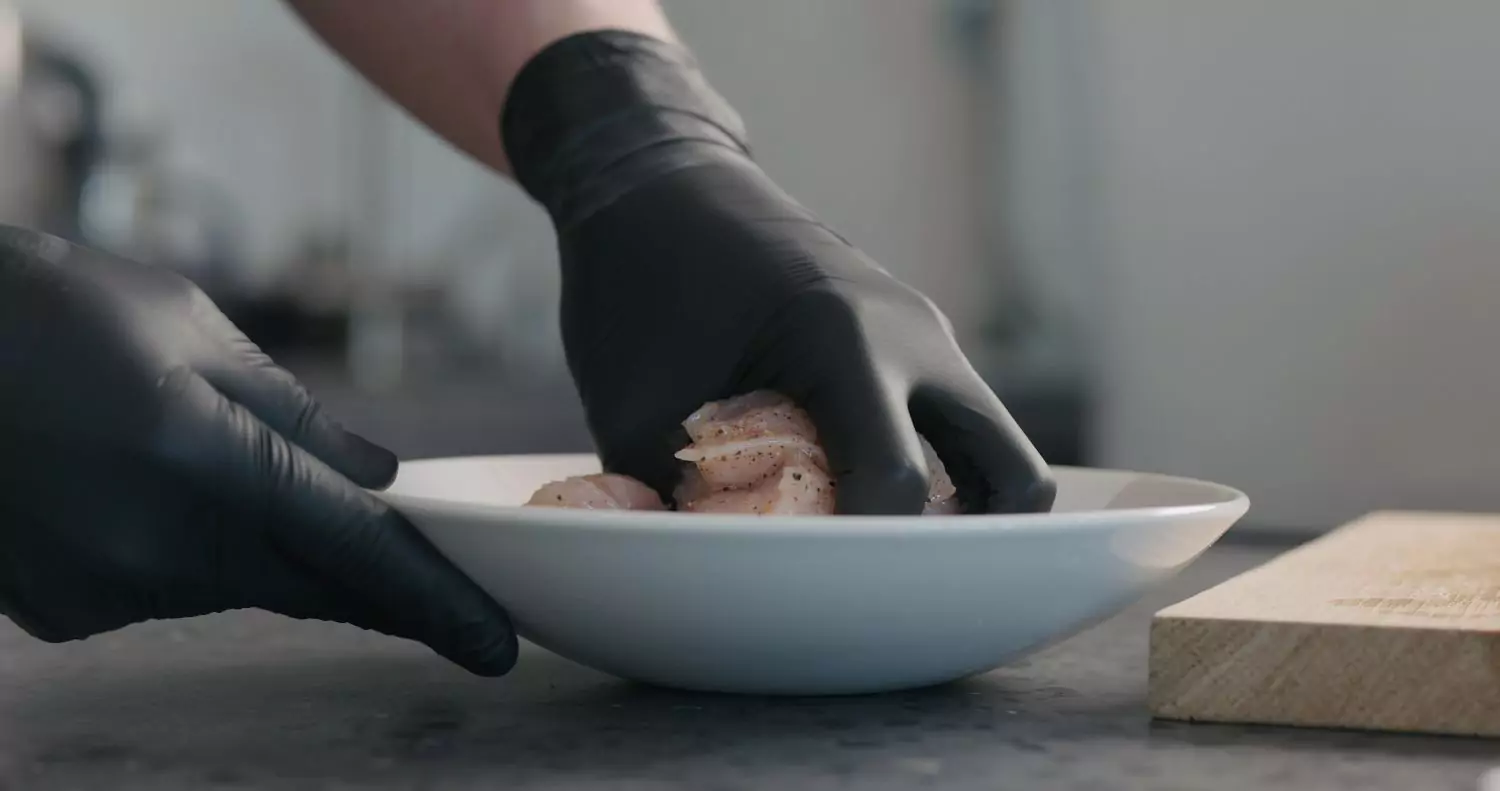
Beyond allergy prevention, the structural integrity of nitrile makes it ideal for handling fatty or oily foods, which can cause other materials to degrade rapidly. When a glove begins to break down, it poses a risk of physical contamination, as micro-particles can leach into the food product. High-quality synthetic options maintain their barrier properties even under thermal stress and mechanical friction. For organizations looking to understand the manufacturing excellence behind these products, exploring about INTCO Medical reveals the technological advancements that have made these protective barriers more accessible and effective than ever before. This commitment to quality ensures that every pair of gloves meets the stringent ISO 22000 food safety management standards, providing peace of mind to operators worldwide.
Navigating Regulatory Standards and Color Coding in Commercial Kitchens
Regulatory compliance is a complex but necessary aspect of running a successful food service business. In the United States, the USDA Food Safety and Inspection Service (FSIS) provides clear guidelines on the types of equipment that can be used in meat and poultry processing. Nitrile gloves that are labeled as "food grade" must pass specific extraction tests to ensure they do not transfer harmful chemicals to food. This is particularly important when dealing with acidic or high-temperature items.
Color-coding systems have also become a best practice in large-scale food production. By using different colored gloves—such as blue for raw proteins and white for ready-to-eat items—kitchens can implement a visual cue system that drastically reduces the risk of cross-contamination. Blue is the most common color in food processing because it is highly visible and does not occur naturally in most food products, making it easier to detect if a piece of the glove accidentally enters the production line. This strategy is supported by the Centers for Disease Control and Prevention (CDC) as part of a robust Hazard Analysis and Critical Control Point (HACCP) plan. Implementing such detailed safety protocols is a testament to a company's dedication to public health.
Sustainability and Long-Term Value in Hand Protection Procurement
As the global community moves toward more sustainable business practices, the longevity and environmental impact of disposable products are coming under the spotlight. While disposable by nature, the durability of nitrile means fewer glove changes are required during a shift compared to thinner vinyl alternatives. This reduction in waste not only benefits the environment but also provides significant cost savings over time. For businesses interested in optimizing their procurement strategy, it is often beneficial to contact INTCO Medical to discuss bulk supply options and customized safety programs. High-performance gloves reduce the frequency of tears, which minimizes downtime and keeps the kitchen running efficiently.
The evolution of the global supply chain has also emphasized the importance of working with manufacturers who invest in research and development. Modern nitrile formulations are thinner and more breathable than their predecessors, reducing hand fatigue for workers who must wear them for eight hours a day. This ergonomic improvement is a key factor in employee retention and workplace satisfaction. Organizations like the Occupational Safety and Health Administration (OSHA) emphasize the importance of choosing personal protective equipment (PPE) that fits well and does not hinder the worker's ability to perform their job safely. Investing in premium protection is an investment in the human capital that drives the food service industry forward.
The Role of Advanced Manufacturing in Global Healthcare and Food Safety
The intersection of healthcare-grade protection and food safety has never been more relevant. Manufacturers that produce high-end medical equipment often apply the same rigorous quality control standards to their food-grade products. This cross-industry expertise allows for the creation of versatile products that excel in various environments, from surgical suites to industrial kitchens. In addition to hand protection, many facilities are now integrating rehabilitation products and specialized physical therapy equipment into their employee wellness programs to address the physical strain associated with manual labor in the food and medical sectors.
INTCO Medical stands at the forefront of this manufacturing revolution. As a high-tech manufacturing company committed to R&D, production, and marketing of medical consumables, the company has built a reputation for excellence across the globe. By leveraging state-of-the-art production lines and innovative material science, they provide essential tools that safeguard health in over 120 countries. Their diverse portfolio ensures that whether a business needs barrier protection or sophisticated recovery tools, there is a solution available that meets the highest international benchmarks.
As the industry leader, INTCO Medical has solidified its position as the largest latex-free nitrile gloves manufacturer in the world. This scale of production allows them to maintain consistent quality and supply even during periods of global volatility. By choosing to partner with a manufacturer of this caliber, food service businesses can ensure they are providing their staff and customers with the highest level of protection available. The commitment to being the largest latex-free nitrile gloves manufacturer is not just about volume; it is about the dedication to creating a safer, latex-free environment for everyone, reducing allergy risks while maximizing hygiene and efficiency in every kitchen and clinic.
FAQ: Everything You Need to Know About Nitrile Gloves in Food Service
1. Are all nitrile gloves safe for food contact?
Not all nitrile gloves are created equal. To be safe for food service, gloves must be "food grade," meaning they comply with FDA regulations for food contact and are free from harmful additives that could leach into food. Always check the packaging for food safety certifications.
2. Can nitrile gloves cause allergic reactions like latex?
No, nitrile is made from synthetic rubber and contains no natural rubber latex proteins. This makes them the ideal choice for individuals with latex allergies or sensitivities, ensuring safety for both the wearer and the consumer.
3. Why are blue nitrile gloves so common in the food industry?
Blue is the industry standard because it is a "non-food" color. If a piece of the glove were to tear off, it would be easily spotted against food products, unlike clear or white gloves which might blend in.
4. Are powder-free nitrile gloves better for food preparation?
Yes, powder-free gloves are highly recommended for food service. The powder used in some gloves (usually cornstarch) can stick to food or surfaces and may cause contamination or affect the taste and texture of the food.
5. How often should food service workers change their nitrile gloves? Gloves should be changed whenever they become torn, soiled, or when moving between different tasks (such as switching from handling raw meat to preparing a salad). Even if no obvious contamination occurs, it is best practice to change them every two hours to prevent sweat buildup and bacterial growth.